A CLOSER LOOK
The Art Institute dates this oil-on-canvas work to 1791, with retouching in 1803, and identifies it as a preparatory sketch for a large painting intended for a restored chapel at Windsor Castle. West worked on the royal chapel project for roughly two decades before George III abandoned it. The small study therefore belongs to a planned cycle that never reached its intended architectural setting.
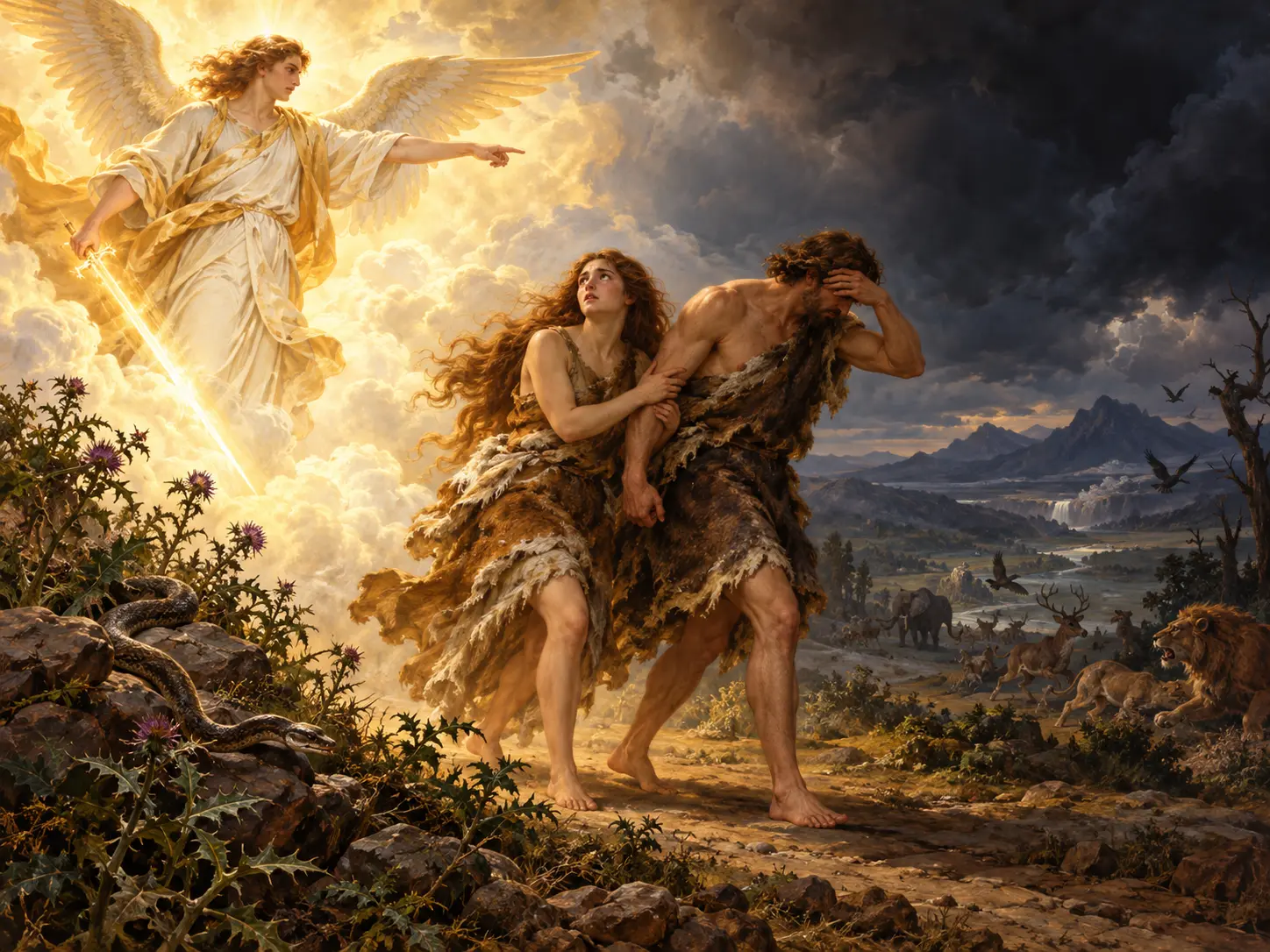
West organizes the departure as a movement between environments. Adam covers his face while Eve looks upward and grasps his arm; a bright, cloud-filled zone presses against darker open ground. Wind pulls at hair and animal-skin clothing. The figures carry the story, while the sharp light, thistles, serpent, and distressed animals make the surrounding world appear to change with them.
The National Gallery of Art holds West’s completed 1791 version, a canvas about nine feet wide. Its record connects the beam of light with the flaming sword in Genesis and notes two additions that are not in the biblical account: an eagle attacking a bird and a lion pursuing horses. Those invented encounters translate the loss of Edenic harmony into action that could remain legible across a chapel-sized painting.
The two museum records describe related objects rather than interchangeable images. The Art Institute source documents the sketch; the National Gallery source documents the completed painting and its royal commission. The comparison clarifies West’s development of the subject, but it does not recover every change between study and final canvas or the appearance the abandoned chapel cycle would have had in place. The generated illustration is an interpretive aid, not a view of either museum object.