A CLOSER LOOK
The Art Institute identifies this work as a miniature room designed by Narcissa Niblack Thorne and dates it to about 1940. The historical range in the title, 1751–55, describes the period represented by the interior. It is not the date when the miniature itself was made.
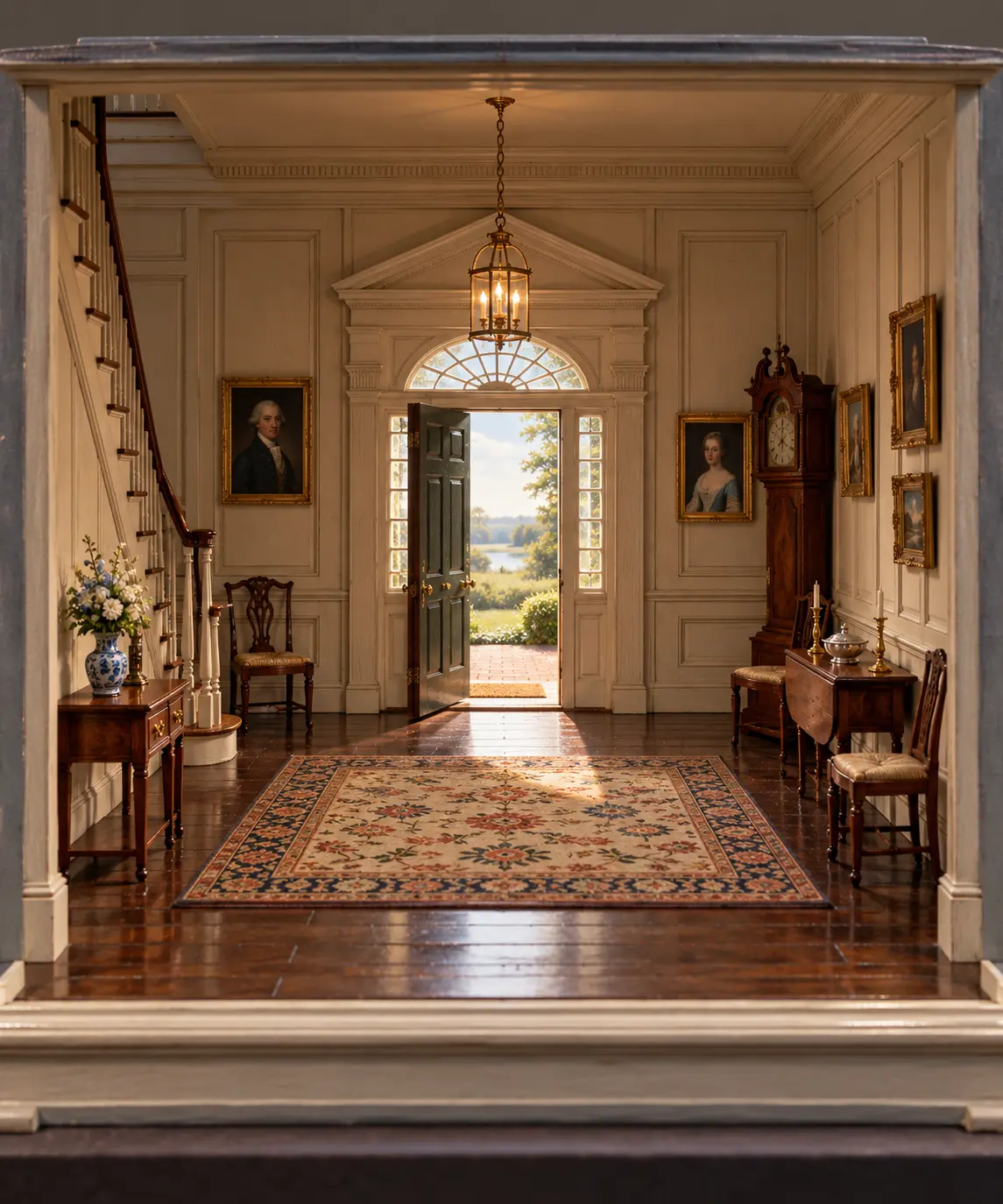
The museum’s description shows a stately entrance hall with an open front door, dark wood floors, paneled walls, portraits, a floral rug, and wooden furniture. Those details build depth through familiar architectural cues: a threshold, a long floor plane, wall divisions, and objects that establish an implied human scale.
Its most useful tension lies between room and model. The open door suggests movement into a house, yet the display remains a carefully bounded object. Looking closely means shifting between the imagined Virginia interior and the twentieth-century craft required to stage it in miniature.
The public catalog supports the maker, date, object type, and visible features summarized here. It does not make this room a neutral record of every Virginia entrance hall from 1751–55. The generated illustration on this page is an interpretive aid grounded in those catalog details; it is not a photograph, facsimile, or source for historical evidence.