A CLOSER LOOK
The reviewed Wikivoyage guide places Altai Tavan Bogd National Park in Bayan-Ulgii, western Mongolia, and connects its cultural landscape with the region’s petroglyphs. UNESCO’s listing of the Petroglyphic Complexes of the Mongolian Altai describes a long record of changes in human activity, including a transition towards herding and horse-dependent mobility. The World Heritage property comprises separate components; its name should not be treated as another name for the entire national park.
The 2011 ICOMOS evaluation locates the Upper Tsagaan Gol complex in a valley whose tributaries rise around the Tavan Bogd glaciers. It describes images on outcrops and boulders shaped by glacial activity. Among the compositions it records are people moving with animals and wheeled vehicles. This gives a reader specific features to ask about: what is depicted, and where does that depiction sit within the valley?
The same evaluation supplies a useful caution. In its history section, ICOMOS notes that the dating assignments then presented rested on style and lacked confirmation from other evidence. That is a statement about the nomination evidence reviewed in 2011, not an assessment of every study published since. It makes the reasoning behind a date part of the story rather than leaving the date as an unexplained label.
Try an original reading exercise with the linked evaluation. Choose one passage describing an image and put its visible features in one column. In another column, record the historical period assigned to it and the basis the report gives. Mark any point where you would need a photograph, a site record or additional research to assess the claim. This exercise does not ask you to date an unrecorded carving or reproduce a real panel from memory.
Now examine the strength of the claim you can make. A description of a wheeled vehicle tells you that the evaluator identified that form in the image. A proposed date requires its own support. Write a sentence that keeps the attribution visible, such as “The 2011 evaluation describes this composition as belonging to…” and then note what evidence would help you check the assignment. The aim is to make the path from description to interpretation inspectable.
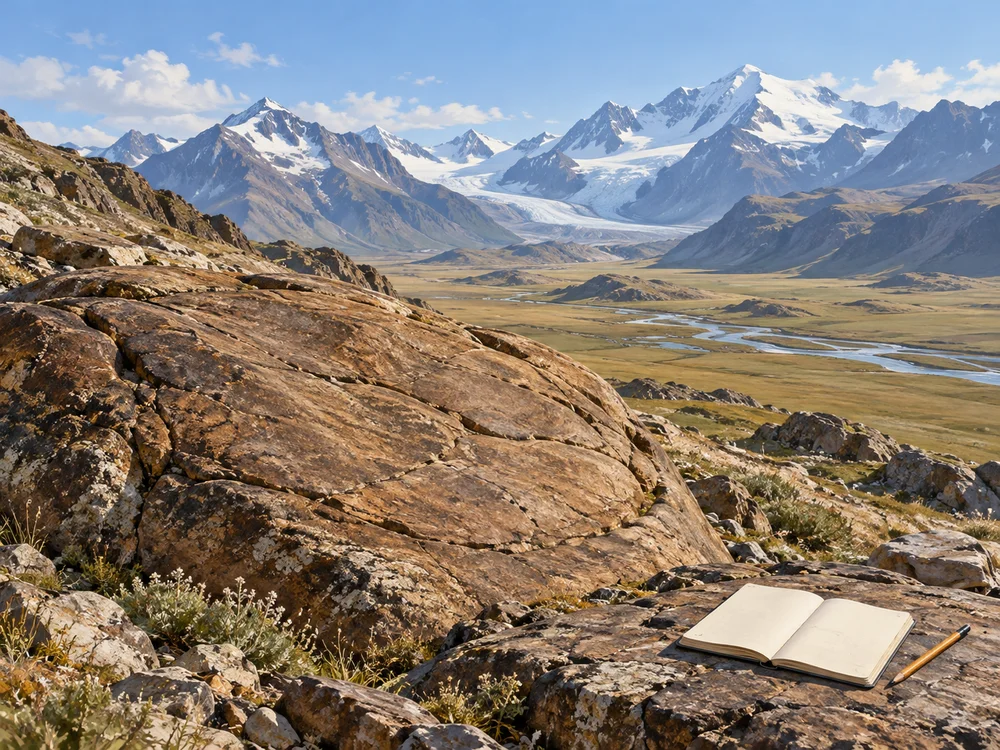
This page develops one cultural-history route into the park’s wider setting. It gives no current border-permit instructions, access guarantee or trekking advice. The old guide’s sweeping historical sequence is not repeated here as a verified chronology. No source photograph or carved motif is reproduced. The generated valley-and-notebook scene is conceptual, contains no invented petroglyphs, and supplies no evidence about a real panel or its date.
Adapted park context: Wikivoyage contributors · CC BY-SA 4.0; archaeological references credited below · Source credits · License and reuse terms