A CLOSER LOOK
Filmmaking Basics is a community-written course about pre-production for narrative motion pictures. Its stated end product is an animatic, a movie assembled from storyboards. The landing page includes a dated 27 March 2008 instruction about installing a FrameForge demo. Treat that as historical course context; this page has not verified the availability or compatibility of those software instructions.
The thumbnail-storyboard lesson asks for simple drawings and emphasizes how a head sits in the frame and where the eyes point. That gives a rough sketch something specific to communicate. A planned viewpoint can be examined before anyone needs to perform the scene. Detailed artwork is unnecessary for the paper exercise below.
The animatic lesson develops the drawings into a timed movie with sound. It presents this as a way to test an idea and its timing before shooting, while acknowledging that some instructions remain minimal. An animatic can make a proposed sequence available for review. It cannot guarantee that the finished film will succeed; performance and production introduce further decisions.
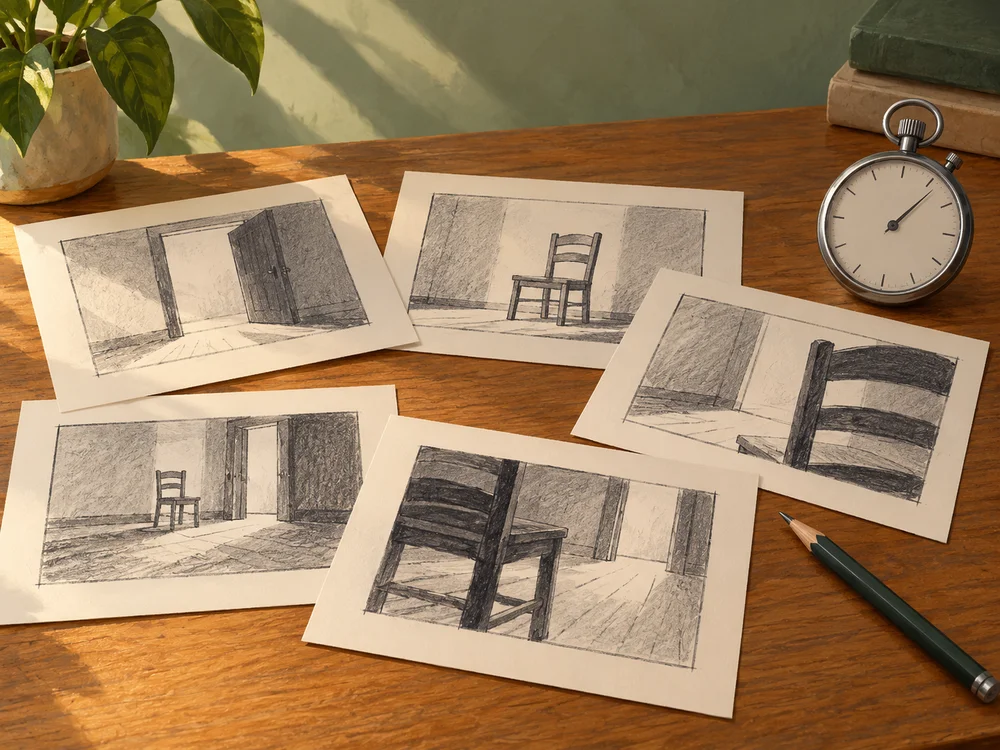
Try an original exercise with four paper cards. Sketch an empty doorway, a view of a chair, the doorway from nearer the chair, and a closer view of the chair. Arrange the cards in a sequence. Show each to a partner while counting a chosen duration aloud, then ask what the sequence suggested. Keep your own interpretation private until they have answered.
Repeat with the same order and change only how long one card stays visible. Ask whether the pause altered an expectation, and record which drawing was held longer. This isolates a timing decision for discussion. A paper sequence offers a limited rehearsal: it leaves camera movement and recorded sound unexplored. The exercise makes no claim of measured learning gains.
The generated illustration supplies original sketches of a doorway and chair associated with this exercise. It reproduces no student submission or course storyboard. The source revisions below document the reviewed lessons, and the contributor-history link leads to their editing credits.
Course discussion adapted from Wikiversity contributors · CC BY-SA 4.0 · Source credits · License and reuse terms