YOUR NEXT DISCOVERY/SpaceFollow your curiosity
Two become one
NASA / GSFC · Reuse terms

Space / 2015-12-28

Two become one

Two become one

NASA's image library records Two become one.

This image, taken with the Wide Field Planetary Camera 2 on board the NASA/ESA Hubble Space Telescope, shows the galaxy NGC 6052, located around 230 million light-years away in the constellation of Hercules. It would be reasonable to think of this as a single abnormal galaxy, and it was originally classified as such. However, it is in fact a “new”

SERENDIPITYA little unexpected
FamiliarWeird

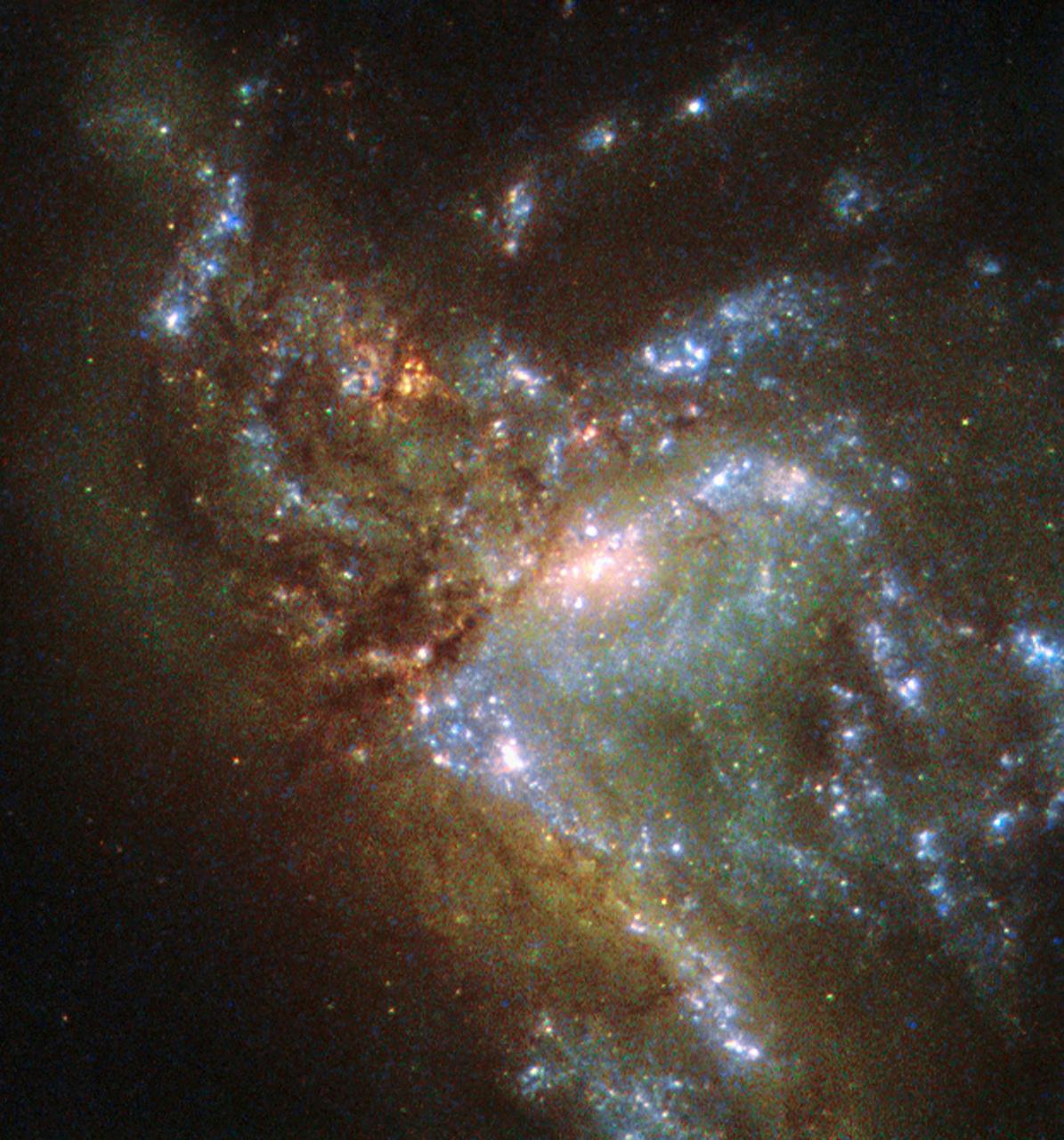
This image, taken with the Wide Field Planetary Camera 2 on board the NASA/ESA Hubble Space Telescope, shows the galaxy NGC 6052, located around 230 million light-years away in the constellation of Hercules. It would be reasonable to think of this as a single abnormal galaxy, and it was originally classified as such. However, it is in fact a “new” galaxy in the process of forming. Two separate galaxies have been gradually drawn together, attracted by gravity, and have collided. We now see them merging into a single structure. As the merging process continues, individual stars are thrown out of their original orbits and placed onto entirely new paths, some very distant from the region of the collision itself. Since the stars produce the light we see, the “galaxy” now appears to have a highl

Explore NASA's original image record for credits and available downloads.

NASA Image and Video LibraryTwo become one

Original explanation based on the sources above. Images carry their own reuse terms.