YOUR NEXT DISCOVERY/SpaceFollow your curiosity
Artemis II Total Solar Eclipse, Partial Frame
NASA / JSC · Reuse terms

Space / 2026-04-06

Artemis II Total Solar Eclipse, Partial Frame

Artemis II Total Solar Eclipse, Partial Frame

NASA's image library records Artemis II Total Solar Eclipse, Partial Frame.

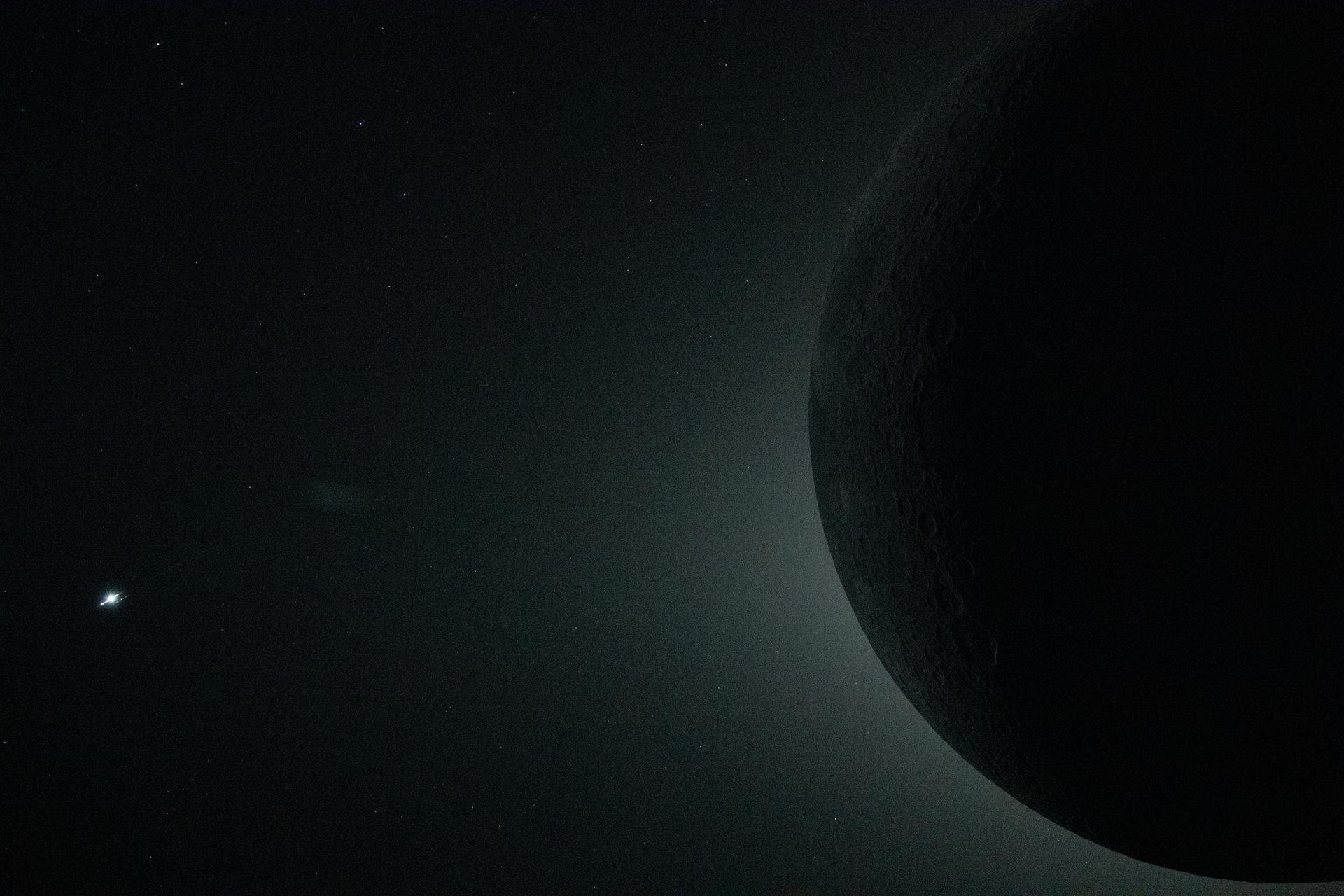
art002e009298 (April 6, 2026) – A close-up view from the Orion spacecraft during the Artemis II crew’s lunar flyby on April 6, 2026, captures a total solar eclipse, with only part of the Moon visible in the frame as it fully obscures the Sun. We see a glowing halo around the dark lunar disk. The science community is investigating whether this effec

SERENDIPITYA little unexpected
FamiliarWeird

art002e009298 (April 6, 2026) – A close-up view from the Orion spacecraft during the Artemis II crew’s lunar flyby on April 6, 2026, captures a total solar eclipse, with only part of the Moon visible in the frame as it fully obscures the Sun. We see a glowing halo around the dark lunar disk. The science community is investigating whether this effect is due to the corona, zodiacal light, or a combination of the two. From this deep-space vantage point, the Moon appeared large enough to sustain nearly 54 minutes of totality, far longer than total solar eclipses typically seen from Earth. The bright silver glint on the left edge of the image is the planet Venus. The round, dark gray feature visible along the Moon’s horizon between the 9 and 10 o’clock positions is Mare Crisium, a feature visib

Explore NASA's original image record for credits and available downloads.

NASA Image and Video LibraryArtemis II Total Solar Eclipse, Partial Frame

Original explanation based on the sources above. Images carry their own reuse terms.