YOUR NEXT DISCOVERY/SpaceFollow your curiosity
The Tethered Axel Autonomously Descends a Rocky Slope
NASA / JPL · Reuse terms

Space / 2020-10-13

The Tethered Axel Autonomously Descends a Rocky Slope

The Tethered Axel Autonomously Descends a Rocky Slope

NASA's image library records The Tethered Axel Autonomously Descends a Rocky Slope.

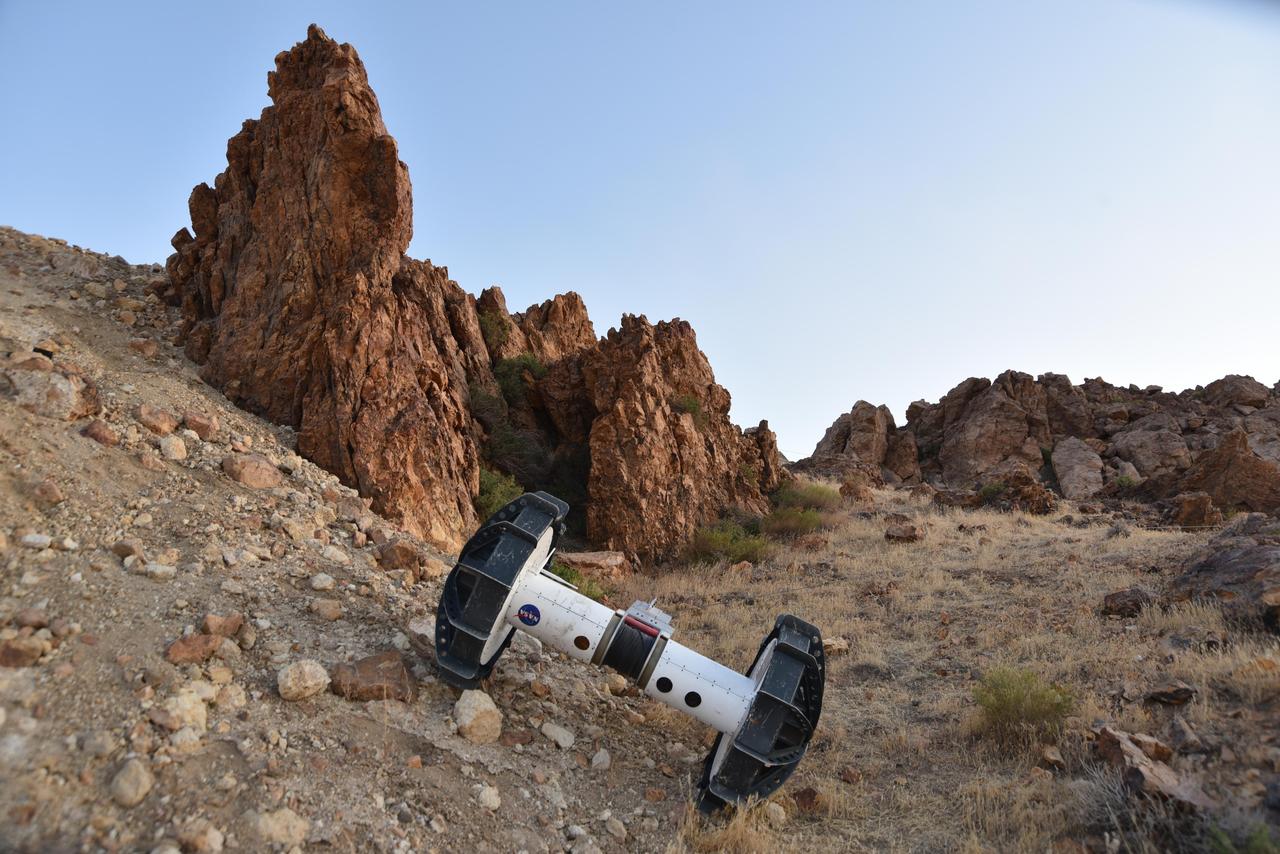
In this photograph, a tethered Axel robot — part of the four-wheeled DuAxel rover — navigates a steep slope during a field test in the Mojave Desert. The tether, which connects to the rover's other half, serves as a climbing rope of sorts while also providing power and a means of communication. This flexibility was built with crater walls, pits, sc

SERENDIPITYA little unexpected
FamiliarWeird

In this photograph, a tethered Axel robot — part of the four-wheeled DuAxel rover — navigates a steep slope during a field test in the Mojave Desert. The tether, which connects to the rover's other half, serves as a climbing rope of sorts while also providing power and a means of communication. This flexibility was built with crater walls, pits, scarps, vents, and other extreme terrain in mind. That's because on Earth, some of the best locations to study geology can be found in rocky outcrops and cliff faces, where many layers of the past are neatly exposed. They're hard enough to reach here, let alone on the Moon, Mars, and other celestial bodies. The DuAxel project is a technology demonstration being developed by roboticists at NASA's Jet Propulsion Laboratory in Southern California to s

Explore NASA's original image record for credits and available downloads.

NASA Image and Video LibraryThe Tethered Axel Autonomously Descends a Rocky Slope

Original explanation based on the sources above. Images carry their own reuse terms.