YOUR NEXT DISCOVERY/SpaceFollow your curiosity
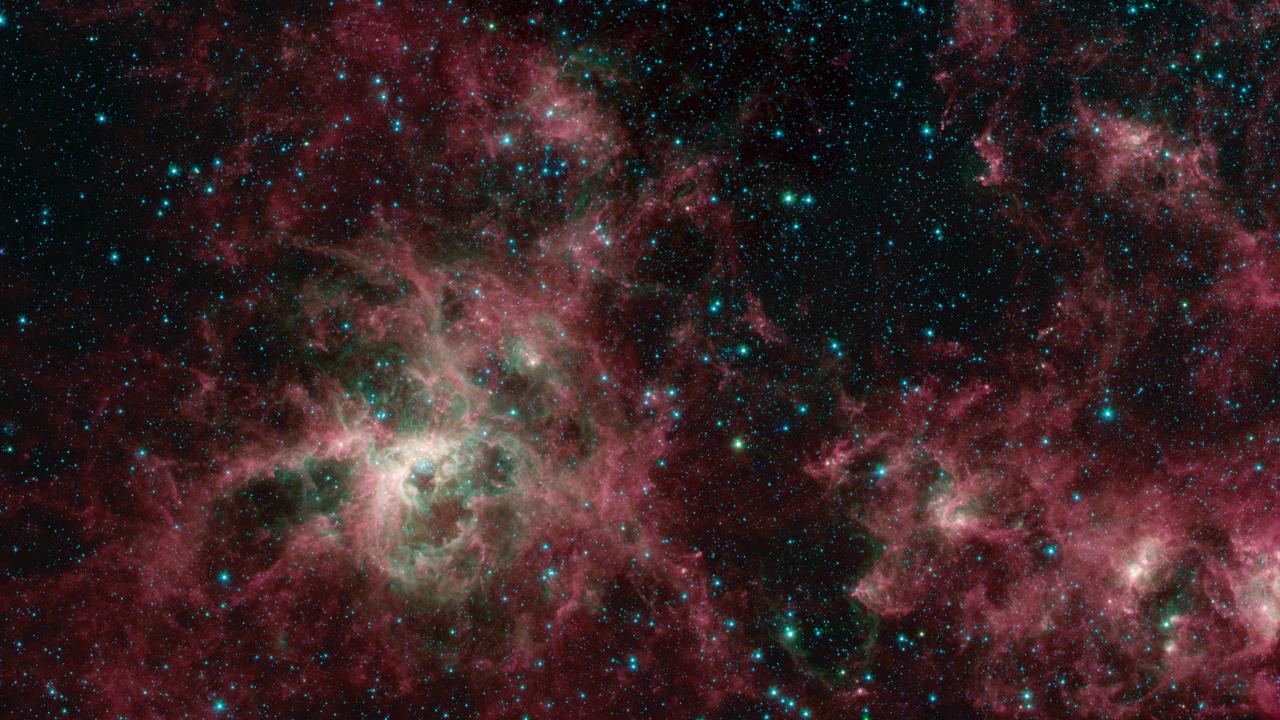
Tarantula Nebula Spitzer 3-Color Image
NASA / JPL · Reuse terms

Space / 2020-01-27

Tarantula Nebula Spitzer 3-Color Image

Tarantula Nebula Spitzer 3-Color Image

NASA's image library records Tarantula Nebula Spitzer 3-Color Image.

This image from NASA's Spitzer Space Telescope shows the Tarantula Nebula in three wavelengths of infrared light, each represented by a different color. The magenta-colored regions are dust composed of molecules called polycyclic aromatic hydrocarbons (PAHs), which are also found in ash from coal, wood and oil fires on Earth. PAHs emit in multiple

SERENDIPITYA little unexpected
FamiliarWeird

This image from NASA's Spitzer Space Telescope shows the Tarantula Nebula in three wavelengths of infrared light, each represented by a different color. The magenta-colored regions are dust composed of molecules called polycyclic aromatic hydrocarbons (PAHs), which are also found in ash from coal, wood and oil fires on Earth. PAHs emit in multiple wavelengths. The PAHs emit in multiple wavelengths, so the magenta color is a combination of red (corresponding to an infrared wavelength of 8 micrometers) and blue (3.6 micrometers). The green color in this image shows the presence of particularly hot gas emitting infrared light at a wavelength of 4.5 micrometers. The stars in the image are mostly a combination of green and blue. White hues indicate regions that radiate in all three wavelengths.

Explore NASA's original image record for credits and available downloads.

NASA Image and Video LibraryTarantula Nebula Spitzer 3-Color Image

Original explanation based on the sources above. Images carry their own reuse terms.