YOUR NEXT DISCOVERY/SpaceFollow your curiosity
Spitzer Spots Bubbles and Bow Shocks
NASA / JPL · Reuse terms

Space / 2019-09-30

Spitzer Spots Bubbles and Bow Shocks

Spitzer Spots Bubbles and Bow Shocks

NASA's image library records Spitzer Spots Bubbles and Bow Shocks.

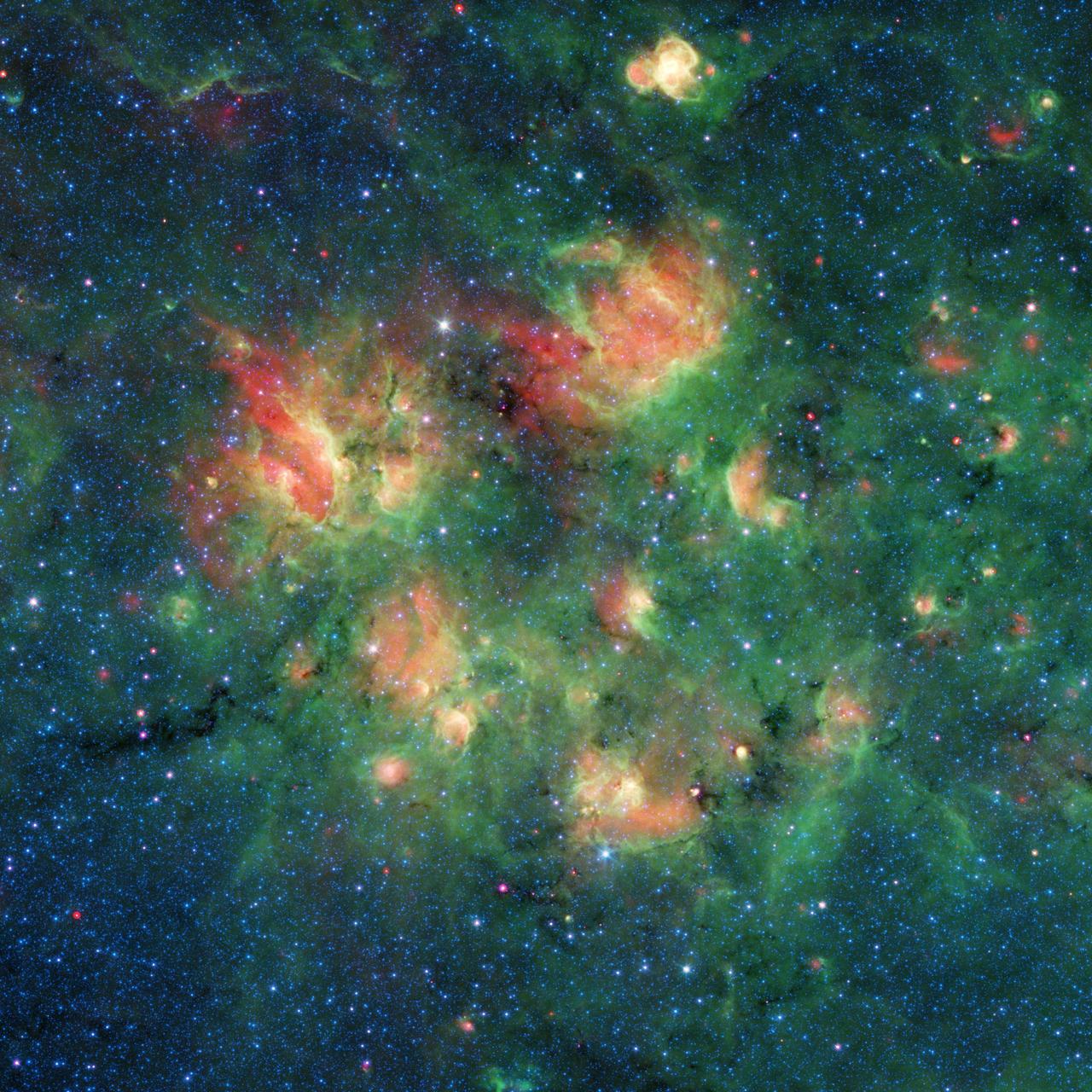
This infrared image from NASA's Spitzer Space Telescope shows a cloud of gas and dust full of bubbles, which are inflated by wind and radiation from massive young stars. Each bubble is filled with hundreds to thousands of stars, which form from dense clouds of gas and dust. The bubbles are estimated to be 10 to 30 light-years across, based on what

SERENDIPITYA little unexpected
FamiliarWeird

This infrared image from NASA's Spitzer Space Telescope shows a cloud of gas and dust full of bubbles, which are inflated by wind and radiation from massive young stars. Each bubble is filled with hundreds to thousands of stars, which form from dense clouds of gas and dust. The bubbles are estimated to be 10 to 30 light-years across, based on what astronomers know about them and other cosmic bubbles. However, determining the exact sizes of individual bubbles can be difficult, because their distance from Earth is challenging to measure and objects appear smaller the farther away they are. Flows of particles called stellar winds emitted by the stars, as well as the pressure of the light those winds produce, can push the surrounding material outward, sometimes creating a distinct perimeter. I

Explore NASA's original image record for credits and available downloads.

NASA Image and Video LibrarySpitzer Spots Bubbles and Bow Shocks

Original explanation based on the sources above. Images carry their own reuse terms.