Space / 2017-03-30
Nar Suclus
Nar Suclus
NASA's image library records Nar Suclus.
WHY IT’S INTERESTING
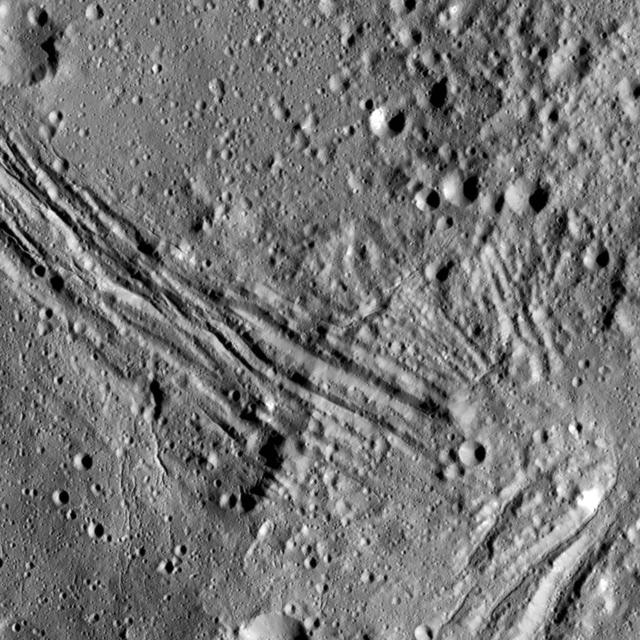
This image shows the eastern part of a feature called Nar Sulcus in Yalode Crater on dwarf planet Ceres, as seen by NASA's Dawn spacecraft. The term "sulcus" (plural: sulci) describes terrain with long, parallel fractures. Sulci are very common on icy moons -- for example, at the south pole of Enceladus, as seen in PIA11686. Nar Sulcus, 31 miles (5