YOUR NEXT DISCOVERY/SpaceFollow your curiosity
Rays of Creusa
NASA / JPL · Reuse terms

Space / 2017-02-20

Rays of Creusa

Rays of Creusa

NASA's image library records Rays of Creusa.

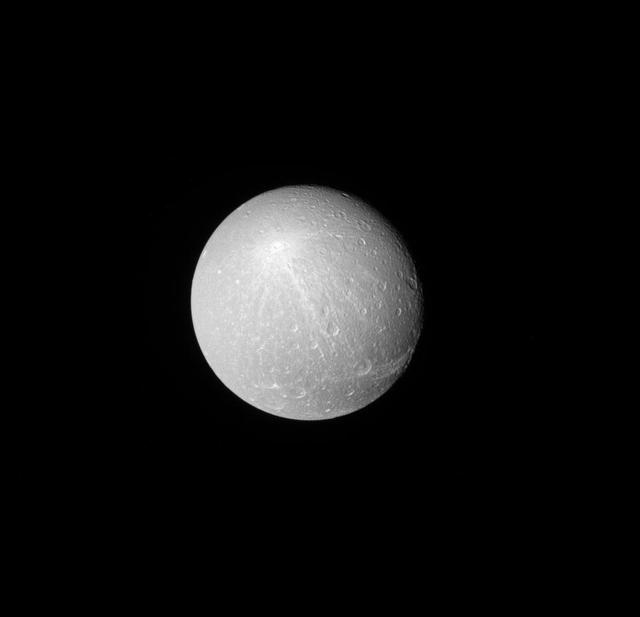
When viewed from a distance with the sun directly behind NASA Cassini, the larger, brighter craters really stand out on moons like Dione. Among these larger craters, some leave bright ray patterns across the moon. The rayed crater seen here on Dione (698 miles, or 1,123 kilometers across) is named Creusa. The rays are brighter material blasted out

SERENDIPITYA little unexpected
FamiliarWeird

When viewed from a distance with the sun directly behind NASA Cassini, the larger, brighter craters really stand out on moons like Dione. Among these larger craters, some leave bright ray patterns across the moon. The rayed crater seen here on Dione (698 miles, or 1,123 kilometers across) is named Creusa. The rays are brighter material blasted out by the impact that formed the crater. Scientists can use the patterns of ejecta (like these rays), to help determine the order of geological events on a moon's surface by examining which features lie on top of other features. This view looks toward the Saturn-facing side of Dione. North on Dione is up and rotated 31 degrees to the right. The image was taken with the Cassini spacecraft narrow-angle camera on Nov. 26, 2016 using a spectral filter w

Explore NASA's original image record for credits and available downloads.

NASA Image and Video LibraryRays of Creusa

Original explanation based on the sources above. Images carry their own reuse terms.