YOUR NEXT DISCOVERY/SpaceFollow your curiosity
NuSTAR View of Galaxy NGC 1068
NASA / JPL · Reuse terms

Space / 2015-12-17

NuSTAR View of Galaxy NGC 1068

NuSTAR View of Galaxy NGC 1068

NASA's image library records NuSTAR View of Galaxy NGC 1068.

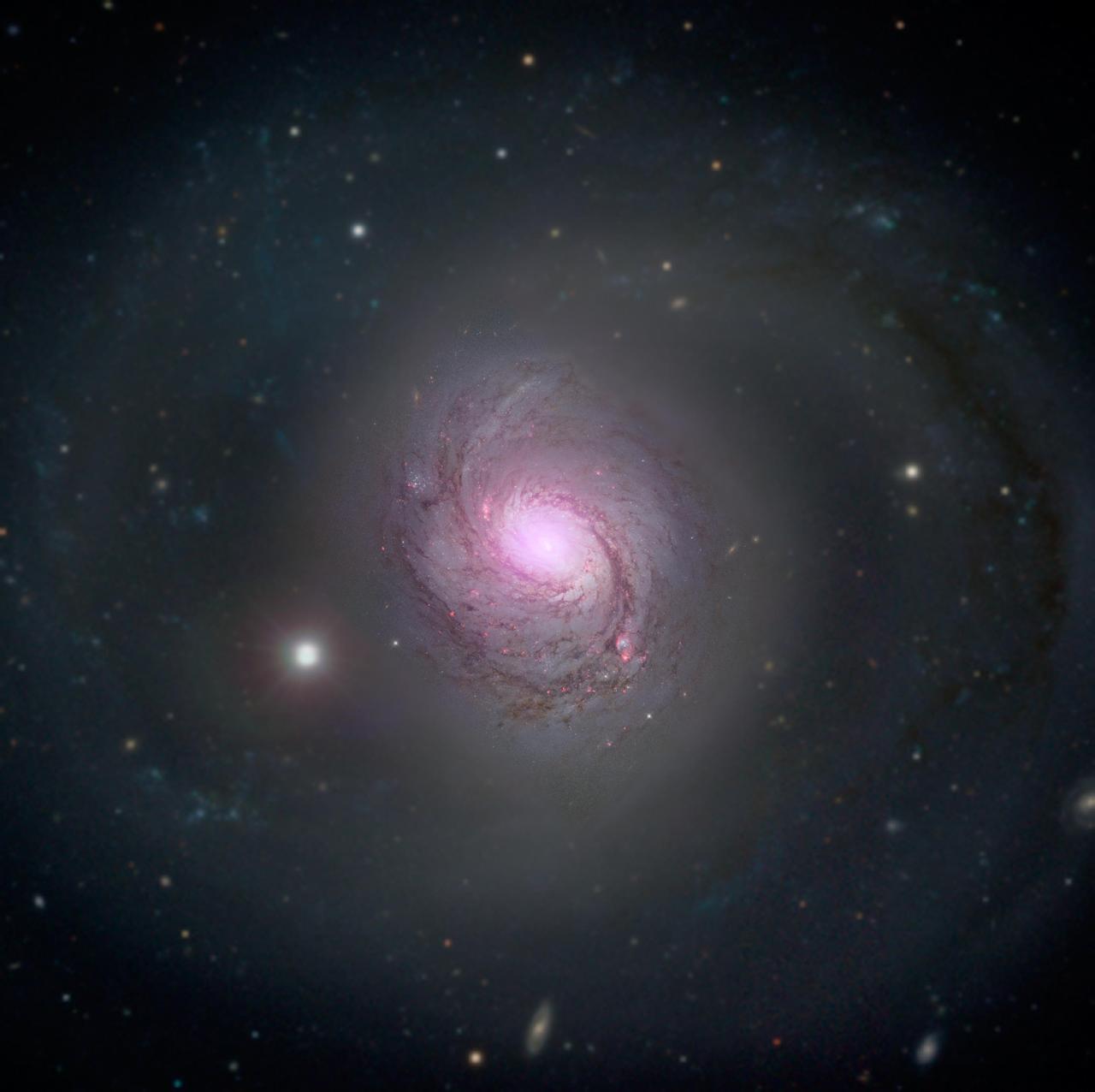
Galaxy NGC 1068 is shown in visible light and X-rays in this composite image. High-energy X-rays (magenta) captured by NASA's Nuclear Spectroscopic Telescope Array, or NuSTAR, are overlaid on visible-light images from both NASA's Hubble Space Telescope and the Sloan Digital Sky Survey. The X-ray light is coming from an active supermassive black hol

SERENDIPITYA little unexpected
FamiliarWeird

Galaxy NGC 1068 is shown in visible light and X-rays in this composite image. High-energy X-rays (magenta) captured by NASA's Nuclear Spectroscopic Telescope Array, or NuSTAR, are overlaid on visible-light images from both NASA's Hubble Space Telescope and the Sloan Digital Sky Survey. The X-ray light is coming from an active supermassive black hole, also known as a quasar, in the center of the galaxy. This supermassive black hole has been extensively studied due to its relatively close proximity to our galaxy. NGC 1068 is about 47 million light-years away in the constellation Cetus. The supermassive black hole is also one of the most obscured known, blanketed by thick clouds of gas and dust. NuSTAR's high-energy X-ray view is the first to penetrate the walls of this black hole's hidden la

Explore NASA's original image record for credits and available downloads.

NASA Image and Video LibraryNuSTAR View of Galaxy NGC 1068

Original explanation based on the sources above. Images carry their own reuse terms.