YOUR NEXT DISCOVERY/SpaceFollow your curiosity
Dissection of a Galaxy
NASA / JPL · Reuse terms

Space / 2004-05-11

Dissection of a Galaxy

Dissection of a Galaxy

NASA's image library records Dissection of a Galaxy.

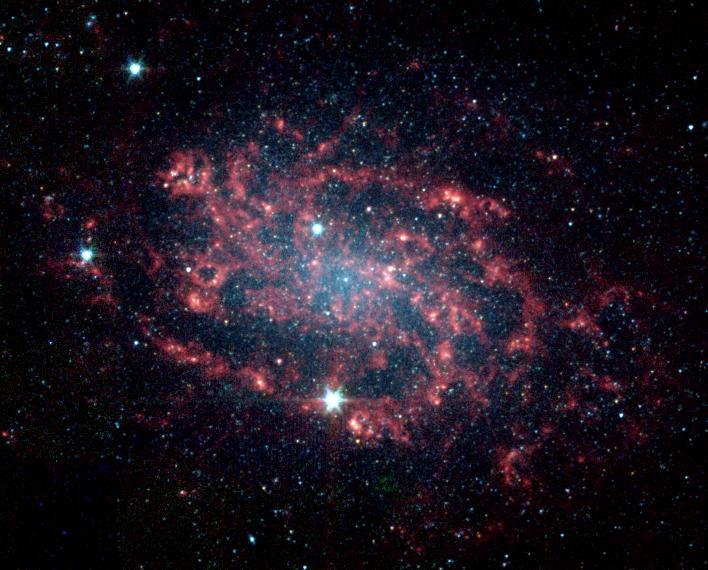
Sometimes, the best way to understand how something works is to take it apart. The same is true for galaxies like NGC 300, which NASA's Spitzer Space Telescope has divided into its various parts. NGC 300 is a face-on spiral galaxy located 7.5 million light-years away in the southern constellation Sculptor. This false-color image taken by the infrar

SERENDIPITYA little unexpected
FamiliarWeird

Sometimes, the best way to understand how something works is to take it apart. The same is true for galaxies like NGC 300, which NASA's Spitzer Space Telescope has divided into its various parts. NGC 300 is a face-on spiral galaxy located 7.5 million light-years away in the southern constellation Sculptor. This false-color image taken by the infrared array camera on Spitzer readily distinguishes the main star component of the galaxy (blue) from its dusty spiral arms (red). The star distribution peaks strongly in the central bulge where older stars congregate, and tapers off along the arms where younger stars reside. Thanks to Spitzer's unique ability to sense the heat or infrared emission from dust, astronomers can now clearly trace the embedded dust structures within NGC 300's arms. When

Explore NASA's original image record for credits and available downloads.

NASA Image and Video LibraryDissection of a Galaxy

Original explanation based on the sources above. Images carry their own reuse terms.