YOUR NEXT DISCOVERY/SpaceFollow your curiosity
E4 True and False Color Hot Spot Mosaic
NASA / JPL · Reuse terms

Space / 1998-03-06

E4 True and False Color Hot Spot Mosaic

E4 True and False Color Hot Spot Mosaic

NASA's image library records E4 True and False Color Hot Spot Mosaic.

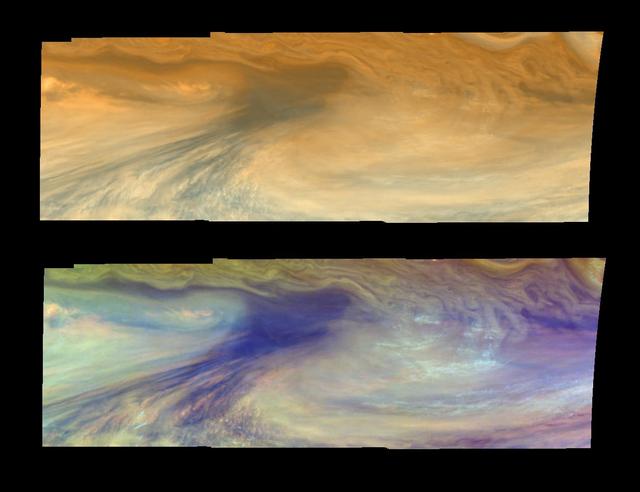
True and false color views of Jupiter from NASA's Galileo spacecraft show an equatorial "hotspot" on Jupiter. These images cover an area 34,000 kilometers by 11,000 kilometers (about 21,100 by 6,800 miles). The top mosaic combines the violet and near infrared continuum filter images to create an image similar to how Jupiter would appear to human ey

SERENDIPITYA little unexpected
FamiliarWeird

True and false color views of Jupiter from NASA's Galileo spacecraft show an equatorial "hotspot" on Jupiter. These images cover an area 34,000 kilometers by 11,000 kilometers (about 21,100 by 6,800 miles). The top mosaic combines the violet and near infrared continuum filter images to create an image similar to how Jupiter would appear to human eyes. Differences in coloration are due to the composition and abundances of trace chemicals in Jupiter's atmosphere. The bottom mosaic uses Galileo's three near-infrared wavelengths displayed in red, green, and blue) to show variations in cloud height and thickness. Bluish clouds are high and thin, reddish clouds are low, and white clouds are high and thick. The dark blue hotspot in the center is a hole in the deep cloud with an overlying thin haz

Explore NASA's original image record for credits and available downloads.

NASA Image and Video LibraryE4 True and False Color Hot Spot Mosaic

Original explanation based on the sources above. Images carry their own reuse terms.