YOUR NEXT DISCOVERY/SpaceFollow your curiosity
The Galilean Satellites
NASA / JPL · Reuse terms

Space / 1997-11-18

The Galilean Satellites

The Galilean Satellites

NASA's image library records The Galilean Satellites.

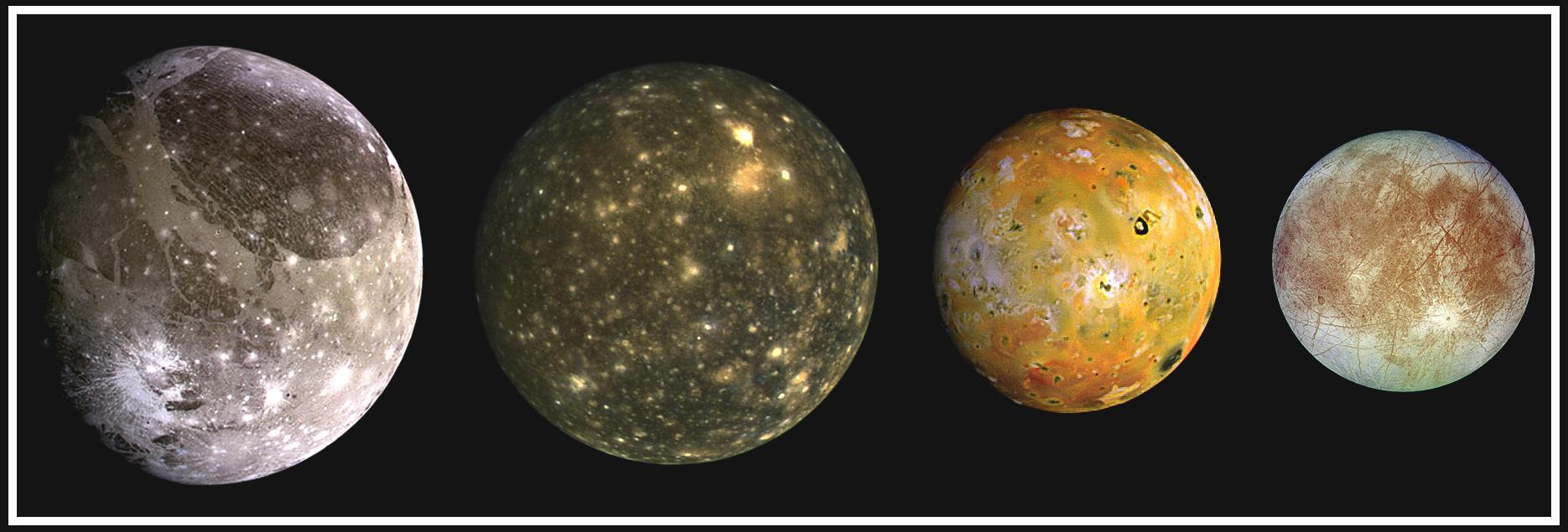
This composite includes the four largest moons of Jupiter which are known as the Galilean satellites. From left to right, the moons shown are Ganymede, Callisto, Io, and Europa. The Galilean satellites were first seen by the Italian astronomer Galileo Galilei in 1610. In order of increasing distance from Jupiter, Io is closest, followed by Europa,

SERENDIPITYA little unexpected
FamiliarWeird

This composite includes the four largest moons of Jupiter which are known as the Galilean satellites. From left to right, the moons shown are Ganymede, Callisto, Io, and Europa. The Galilean satellites were first seen by the Italian astronomer Galileo Galilei in 1610. In order of increasing distance from Jupiter, Io is closest, followed by Europa, Ganymede, and Callisto. The order of these satellites from the planet Jupiter helps to explain some of the visible differences among the moons. Io is subject to the strongest tidal stresses from the massive planet. These stresses generate internal heating which is released at the surface and makes Io the most volcanically active body in our solar system. Europa appears to be strongly differentiated with a rock/iron core, an ice layer at its surfa

Explore NASA's original image record for credits and available downloads.

NASA Image and Video LibraryThe Galilean Satellites

Original explanation based on the sources above. Images carry their own reuse terms.