YOUR NEXT DISCOVERY/SpaceFollow your curiosity
Hubble Catches Jupiter's Largest Moon Going to the 'Dark Side'
NASA / GSFC · Reuse terms

Space / 2017-12-08

Hubble Catches Jupiter's Largest Moon Going to the 'Dark Side'

Hubble Catches Jupiter's Largest Moon Going to the 'Dark Side'

NASA's image library records Hubble Catches Jupiter's Largest Moon Going to the 'Dark Side'.

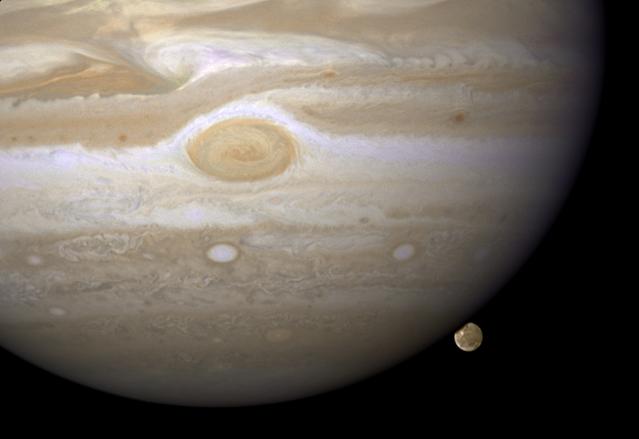
Hubble Catches Jupiter's Largest Moon Going to the 'Dark Side' HST/WFPC2 Image of Jupiter and Ganymede Taken April 9, 2007 NASA's Hubble Space Telescope has caught Jupiter's moon Ganymede playing a game of "peek-a-boo." In this crisp Hubble image, Ganymede is shown just before it ducks behind the giant planet. Ganymede completes an orbit

SERENDIPITYA little unexpected
FamiliarWeird

Hubble Catches Jupiter's Largest Moon Going to the 'Dark Side' HST/WFPC2 Image of Jupiter and Ganymede Taken April 9, 2007 NASA's Hubble Space Telescope has caught Jupiter's moon Ganymede playing a game of "peek-a-boo." In this crisp Hubble image, Ganymede is shown just before it ducks behind the giant planet. Ganymede completes an orbit around Jupiter every seven days. Because Ganymede's orbit is tilted nearly edge-on to Earth, it routinely can be seen passing in front of and disappearing behind its giant host, only to reemerge later. Composed of rock and ice, Ganymede is the largest moon in our solar system. It is even larger than the planet Mercury. But Ganymede looks like a dirty snowball next to Jupiter, the largest planet in our solar system. Jupiter is so big that only par

Explore NASA's original image record for credits and available downloads.

NASA Image and Video LibraryHubble Catches Jupiter's Largest Moon Going to the 'Dark Side'

Original explanation based on the sources above. Images carry their own reuse terms.