YOUR NEXT DISCOVERY/SpaceFollow your curiosity
NASA's Hubble Sees A New Supernova Remnant Light Up
NASA / GSFC · Reuse terms

Space / 2017-12-08

NASA's Hubble Sees A New Supernova Remnant Light Up

NASA's Hubble Sees A New Supernova Remnant Light Up

NASA's image library records NASA's Hubble Sees A New Supernova Remnant Light Up.

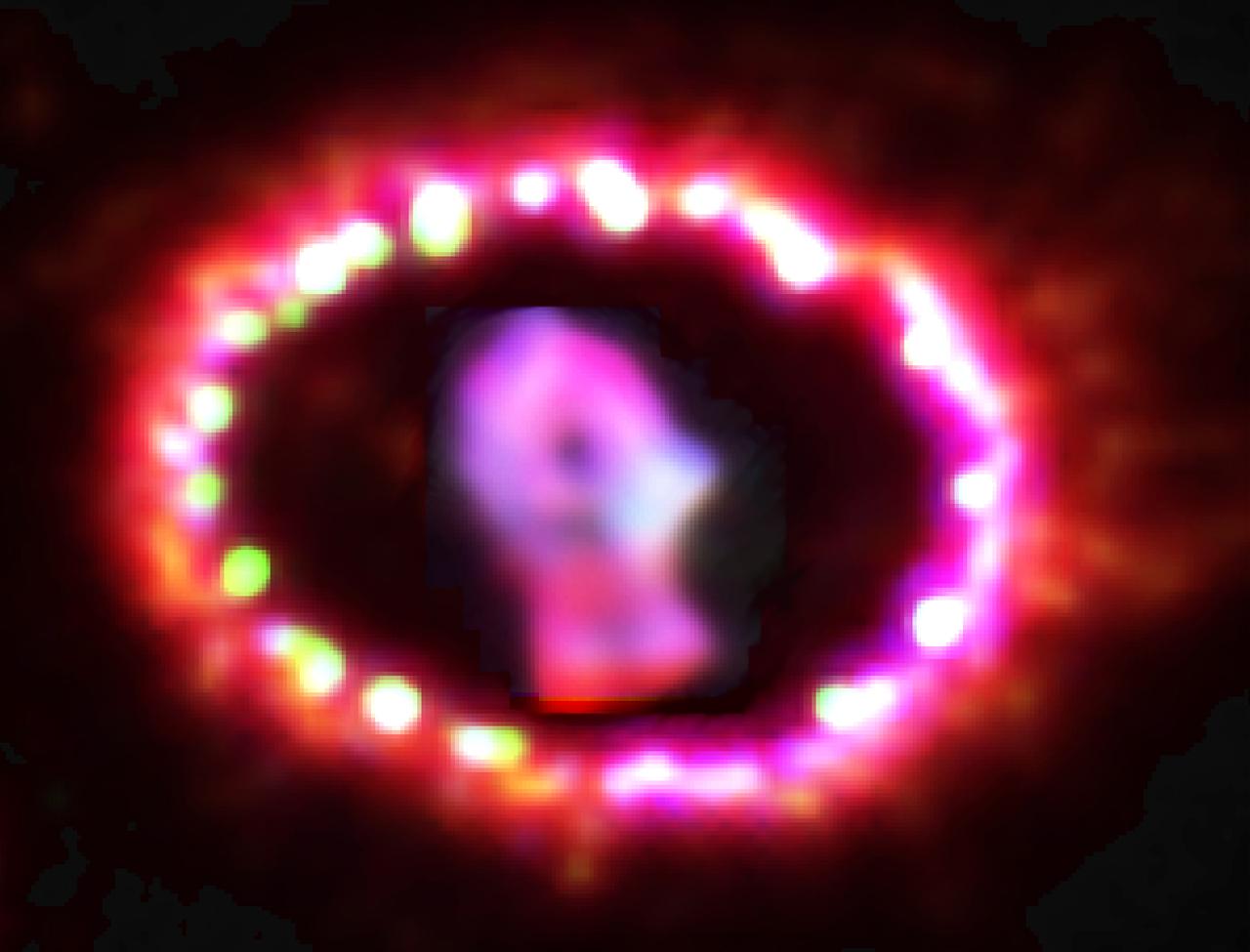
NASA image release June 10, 2011 Astronomers using NASA's Hubble Space Telescope are witnessing the unprecedented transition of a supernova to a supernova remnant, where light from an exploding star in a neighboring galaxy, the Large Magellanic Cloud, reached Earth in February 1987. Named Supernova 1987A, it was the closest supernova explosion witn

SERENDIPITYA little unexpected
FamiliarWeird

NASA image release June 10, 2011 Astronomers using NASA's Hubble Space Telescope are witnessing the unprecedented transition of a supernova to a supernova remnant, where light from an exploding star in a neighboring galaxy, the Large Magellanic Cloud, reached Earth in February 1987. Named Supernova 1987A, it was the closest supernova explosion witnessed in almost 400 years. The supernova's close proximity to Earth has allowed astronomers to study it in detail as it evolves. Now, the supernova debris, which has faded over the years, is brightening. This means that a different power source has begun to light the debris. The debris of SN 1987A is beginning to impact the surrounding ring, creating powerful shock waves that generate X-rays observed with NASA's Chandra X-ray Observatory. Those X

Explore NASA's original image record for credits and available downloads.

NASA Image and Video LibraryNASA's Hubble Sees A New Supernova Remnant Light Up

Original explanation based on the sources above. Images carry their own reuse terms.