YOUR NEXT DISCOVERY/SpaceFollow your curiosity
A Whole New Jupiter
NASA / GSFC · Reuse terms

Space / 2017-12-08

A Whole New Jupiter

A Whole New Jupiter

NASA's image library records A Whole New Jupiter.

Early science results from NASA’s Juno mission to Jupiter portray the largest planet in our solar system as a complex, gigantic, turbulent world, with Earth-sized polar cyclones, plunging storm systems that travel deep into the heart of the gas giant, and a mammoth, lumpy magnetic field that may indicate it was generated closer to the planet’s surf

SERENDIPITYA little unexpected
FamiliarWeird

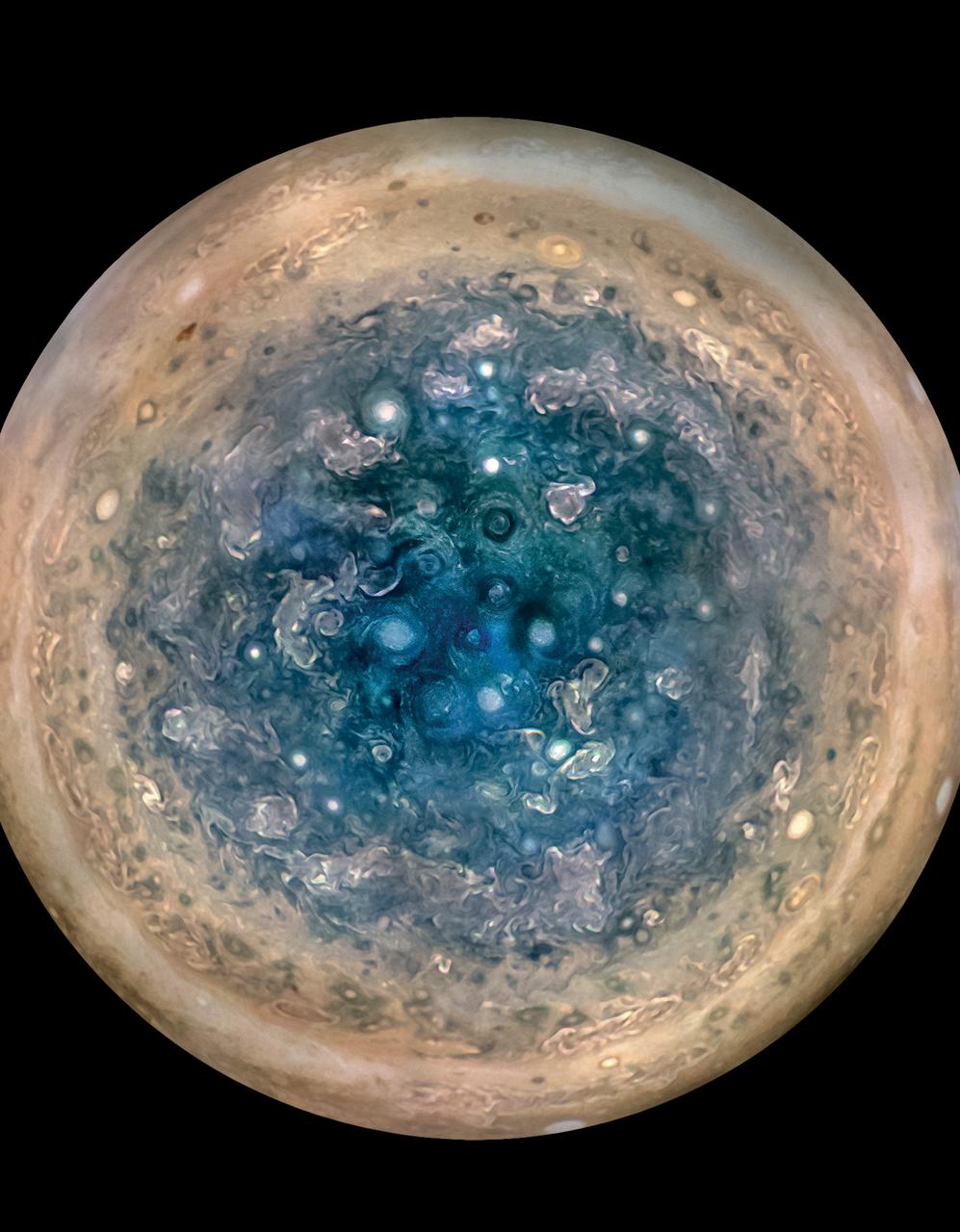
Early science results from NASA’s Juno mission to Jupiter portray the largest planet in our solar system as a complex, gigantic, turbulent world, with Earth-sized polar cyclones, plunging storm systems that travel deep into the heart of the gas giant, and a mammoth, lumpy magnetic field that may indicate it was generated closer to the planet’s surface than previously thought. This image shows Jupiter’s south pole, as seen by NASA’s Juno spacecraft from an altitude of 32,000 miles (52,000 kilometers). The oval features are cyclones, up to 600 miles (1,000 kilometers) in diameter. Multiple images taken with the JunoCam instrument on three separate orbits were combined to show all areas in daylight, enhanced color, and stereographic projection. Read more: go.nasa.gov/2rEgNhT Credits: NASA/JPL

Explore NASA's original image record for credits and available downloads.

NASA Image and Video LibraryA Whole New Jupiter

Original explanation based on the sources above. Images carry their own reuse terms.