YOUR NEXT DISCOVERY/SpaceFollow your curiosity
Hubble Captures Massive Dead Disk Galaxy that Challenges Theories of Galaxy Evolution
NASA / GSFC · Reuse terms

Space / 2017-12-08

Hubble Captures Massive Dead Disk Galaxy that Challenges Theories of Galaxy Evolution

Hubble Captures Massive Dead Disk Galaxy that Challenges Theories of Galaxy Evolution

NASA's image library records Hubble Captures Massive Dead Disk Galaxy that Challenges Theories of Galaxy Evolution.

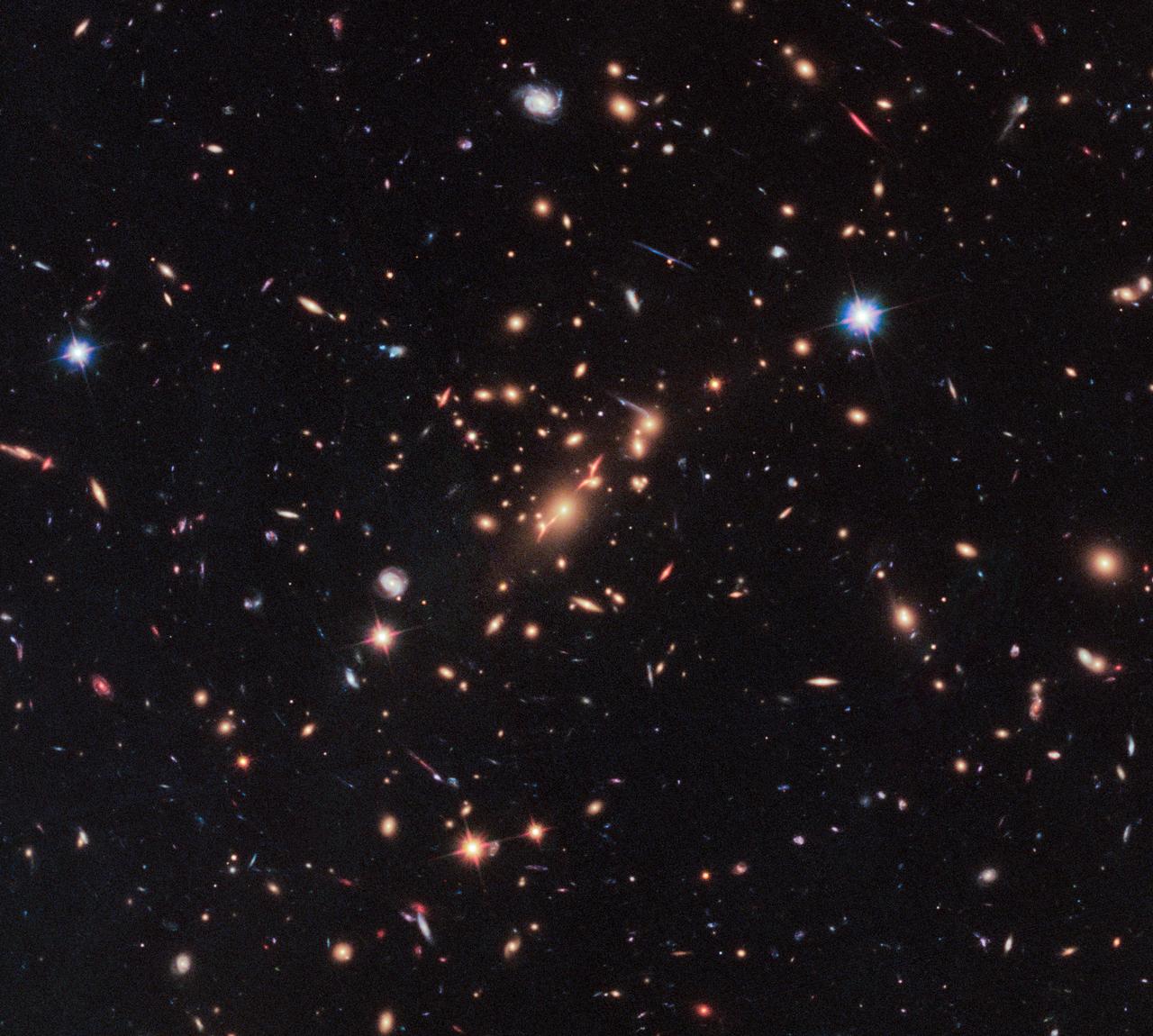
By combining the power of a "natural lens" in space with the capability of NASA's Hubble Space Telescope, astronomers made a surprising discovery—the first example of a compact yet massive, fast-spinning, disk-shaped galaxy that stopped making stars only a few billion years after the big bang. Finding such a galaxy early in the history of

SERENDIPITYA little unexpected
FamiliarWeird

By combining the power of a "natural lens" in space with the capability of NASA's Hubble Space Telescope, astronomers made a surprising discovery—the first example of a compact yet massive, fast-spinning, disk-shaped galaxy that stopped making stars only a few billion years after the big bang. Finding such a galaxy early in the history of the universe challenges the current understanding of how massive galaxies form and evolve, say researchers. Read more: go.nasa.gov/2sWwKkc caption: Acting as a “natural telescope” in space, the gravity of the extremely massive foreground galaxy cluster MACS J2129-0741 magnifies, brightens, and distorts the far-distant background galaxy MACS2129-1, shown in the top box. The middle box is a blown-up view of the gravitationally lensed galaxy. In th

Explore NASA's original image record for credits and available downloads.

NASA Image and Video LibraryHubble Captures Massive Dead Disk Galaxy that Challenges Theories of Galaxy Evolution

Original explanation based on the sources above. Images carry their own reuse terms.