YOUR NEXT DISCOVERY/SpaceFollow your curiosity
ARC-1986-A86-7020
NASA / ARC · Reuse terms

Space / 1986-01-25

ARC-1986-A86-7020

ARC-1986-A86-7020

NASA's image library records ARC-1986-A86-7020.

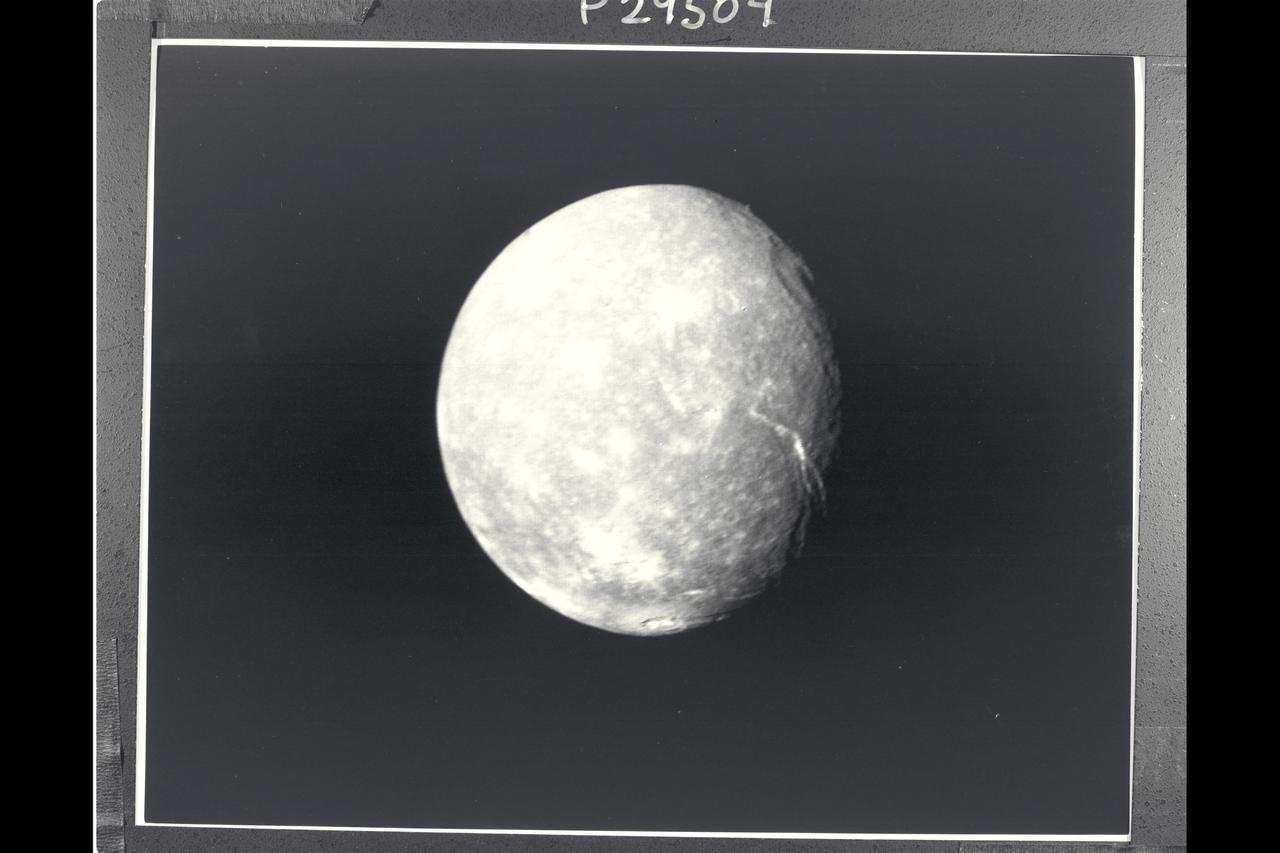
P-29504BW Range: 500,000 kilometers (300,000 miles) This full-disk view of Uranus' moon Titania in the early morning hours, a clear-filter image returned by the Voyager narrow-angle camera, shows many circular depressions-probably impact craters. Other bright spots are distinguished by radiating rays and are probably halo craters that mark relative

SERENDIPITYA little unexpected
FamiliarWeird

P-29504BW Range: 500,000 kilometers (300,000 miles) This full-disk view of Uranus' moon Titania in the early morning hours, a clear-filter image returned by the Voyager narrow-angle camera, shows many circular depressions-probably impact craters. Other bright spots are distinguished by radiating rays and are probably halo craters that mark relatively more recent impacts. Even more interesting are the linear troughs (right) that are probably fault canyons. The troughs break the crust in two directions, an indication of some tectonic extension of Titania's crust. These features indicate that this icy satellite has a dynamic, active interior. Titania is about 1,600 km (1,000 mi) in diameter; the resolution of this image is about 9 km (6 mi).

Explore NASA's original image record for credits and available downloads.

NASA Image and Video LibraryARC-1986-A86-7020

Original explanation based on the sources above. Images carry their own reuse terms.