YOUR NEXT DISCOVERY/SpaceFollow your curiosity
ARC-1979-AC79-7026
NASA / ARC · Reuse terms

Space / 1979-02-26

ARC-1979-AC79-7026

ARC-1979-AC79-7026

NASA's image library records ARC-1979-AC79-7026.

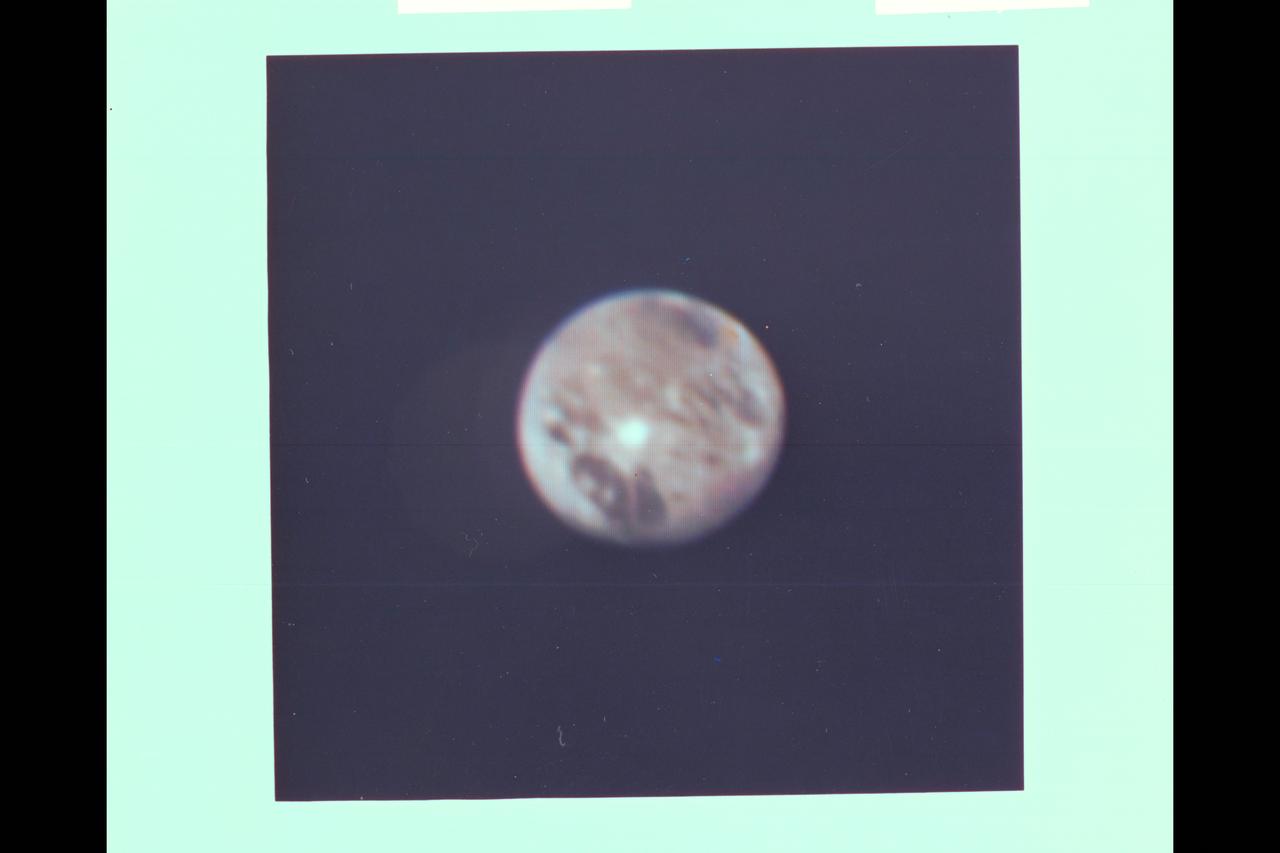
Range : 5 million miles (8.025 million kilometers) This is a morning shot of Ganymede, largest of Jupiter's 13 satellites. It's slightly larger than Mercury with a density about twice that of water. It's believed to be made of rock and ice with a surface of water and ice. Ganymede is 4 times brighter than our Moon with the bright spot in center of

SERENDIPITYA little unexpected
FamiliarWeird

Range : 5 million miles (8.025 million kilometers) This is a morning shot of Ganymede, largest of Jupiter's 13 satellites. It's slightly larger than Mercury with a density about twice that of water. It's believed to be made of rock and ice with a surface of water and ice. Ganymede is 4 times brighter than our Moon with the bright spot in center of photo 5 times brighter than the Moon, and may contain more ice than surrounding areas. The bright pattern around the spot seems like ray craters on the Moon and Mercury and the area may in fact be an impact crater that has exposed fresh, underlying ice. Photo taken through blue, green and orange filters.

Explore NASA's original image record for credits and available downloads.

NASA Image and Video LibraryARC-1979-AC79-7026

Original explanation based on the sources above. Images carry their own reuse terms.