YOUR NEXT DISCOVERY/SpaceFollow your curiosity
Space Science
NASA / MSFC · Reuse terms

Space / 2004-10-07

Space Science

Space Science

NASA's image library records Space Science.

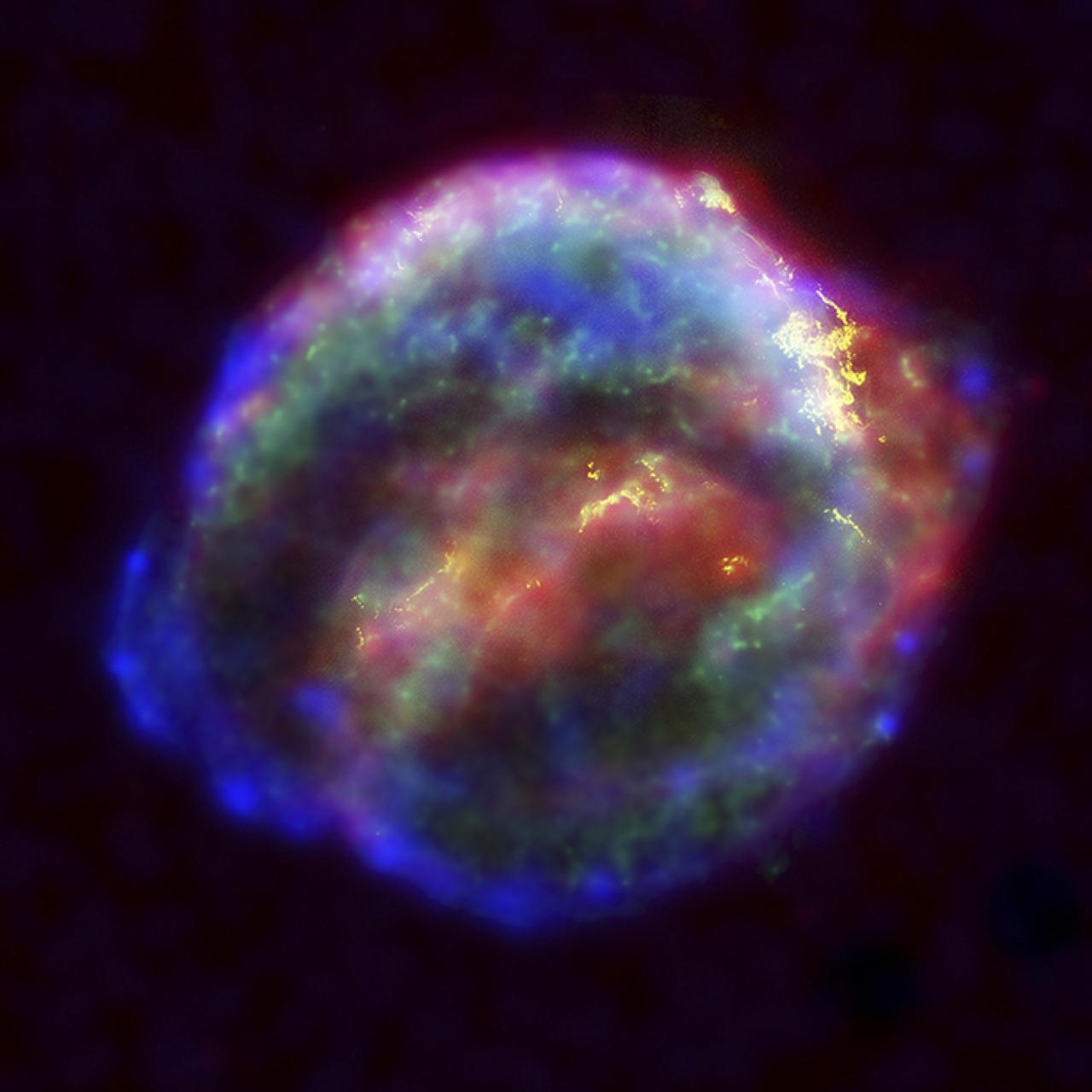
Four hundred years ago, sky watchers, including the famous astronomer Johannes Kepler, best known as the discoverer of the laws of planetary motion, were startled by the sudden appearance of a new star in the western sky, rivaling the brilliance of the nearby planets. Modern astronomers, using NASA's three orbiting Great Observatories, are unraveli

SERENDIPITYA little unexpected
FamiliarWeird

Four hundred years ago, sky watchers, including the famous astronomer Johannes Kepler, best known as the discoverer of the laws of planetary motion, were startled by the sudden appearance of a new star in the western sky, rivaling the brilliance of the nearby planets. Modern astronomers, using NASA's three orbiting Great Observatories, are unraveling the mysteries of the expanding remains of Kepler's supernova, the last such object seen to explode in our Milky Way galaxy. When a new star appeared Oct. 9, 1604, observers could use only their eyes to study it. The telescope would not be invented for another four years. A team of modern astronomers has the combined abilities of NASA's Great Observatories, the Spritzer Space Telescope (SST), Hubble Space Telescope (HST), and Chandra X-Ray Obse

Explore NASA's original image record for credits and available downloads.

NASA Image and Video LibrarySpace Science

Original explanation based on the sources above. Images carry their own reuse terms.