YOUR NEXT DISCOVERY/SpaceFollow your curiosity
History of Chandra X-Ray Observatory
NASA / MSFC · Reuse terms

Space / 1999-12-01

History of Chandra X-Ray Observatory

History of Chandra X-Ray Observatory

NASA's image library records History of Chandra X-Ray Observatory.

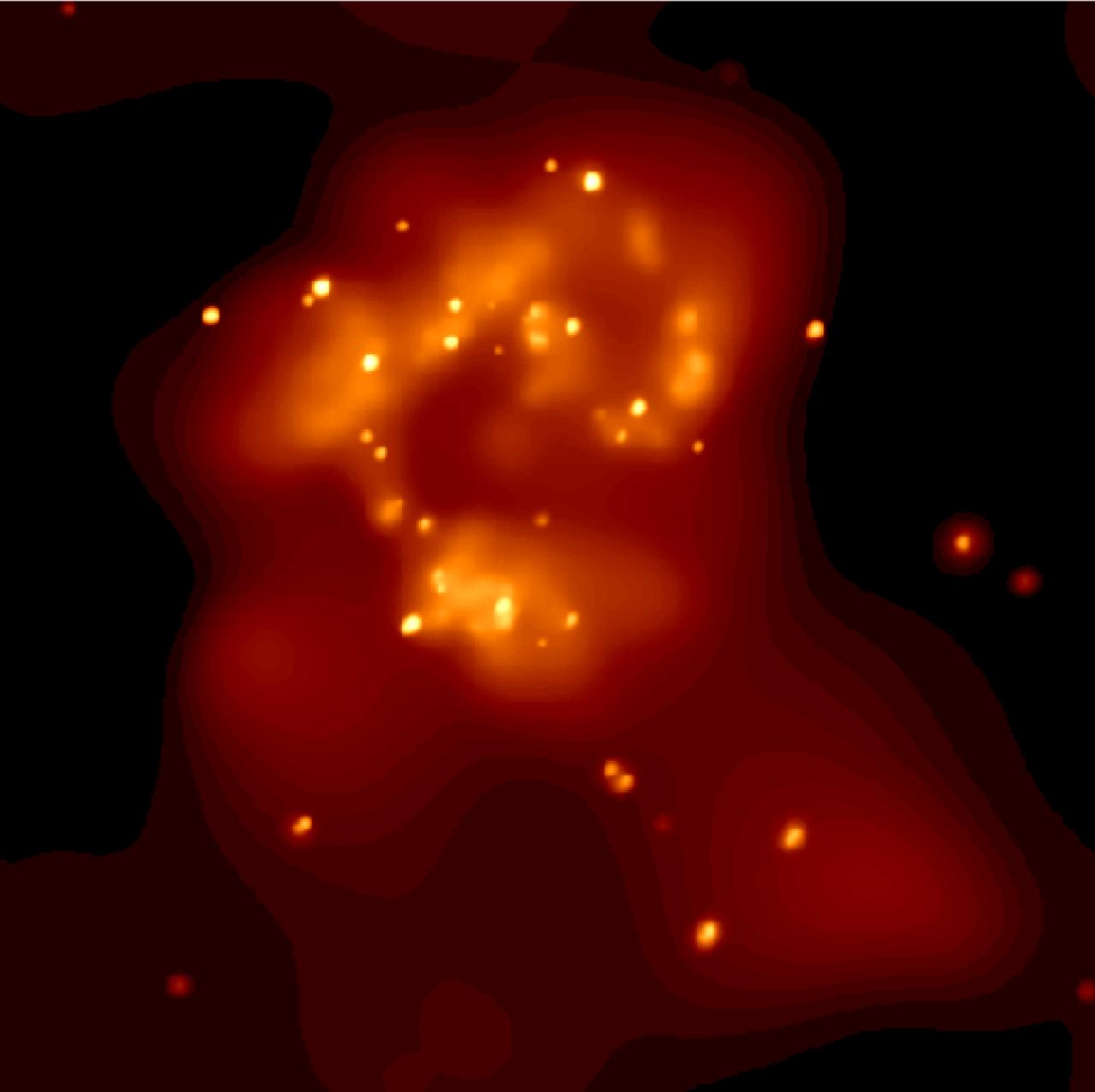
This Chandra image shows the central regions of two colliding galaxies known collectively as the Antennae (NGC-4038/4039). The dozens of bright pointy-like sources are neutron stars or black holes pulling gas off nearby stars. The bright fuzzy patches are multimillion degree gas superbubbles, thousands of light years in diameter that were produced

SERENDIPITYA little unexpected
FamiliarWeird

This Chandra image shows the central regions of two colliding galaxies known collectively as the Antennae (NGC-4038/4039). The dozens of bright pointy-like sources are neutron stars or black holes pulling gas off nearby stars. The bright fuzzy patches are multimillion degree gas superbubbles, thousands of light years in diameter that were produced by the accumulated power of thousands of supernovae. The remaining glow of x-ray emission could be due to many faint x-ray sources or to clouds of hot gas in the galaxies. About 60 million light years from Earth in the constellation Corvus, the Antennae Galaxies got their nickname from the wispy anntennae-like streams of gas as seen by optical telescopes. These ongoing wisps are believed to have been produced approximately 100 million years ago b

Explore NASA's original image record for credits and available downloads.

NASA Image and Video LibraryHistory of Chandra X-Ray Observatory

Original explanation based on the sources above. Images carry their own reuse terms.