YOUR NEXT DISCOVERY/SpaceFollow your curiosity
Space Science
NASA / MSFC · Reuse terms

Space / 2000-01-01

Space Science

Space Science

NASA's image library records Space Science.

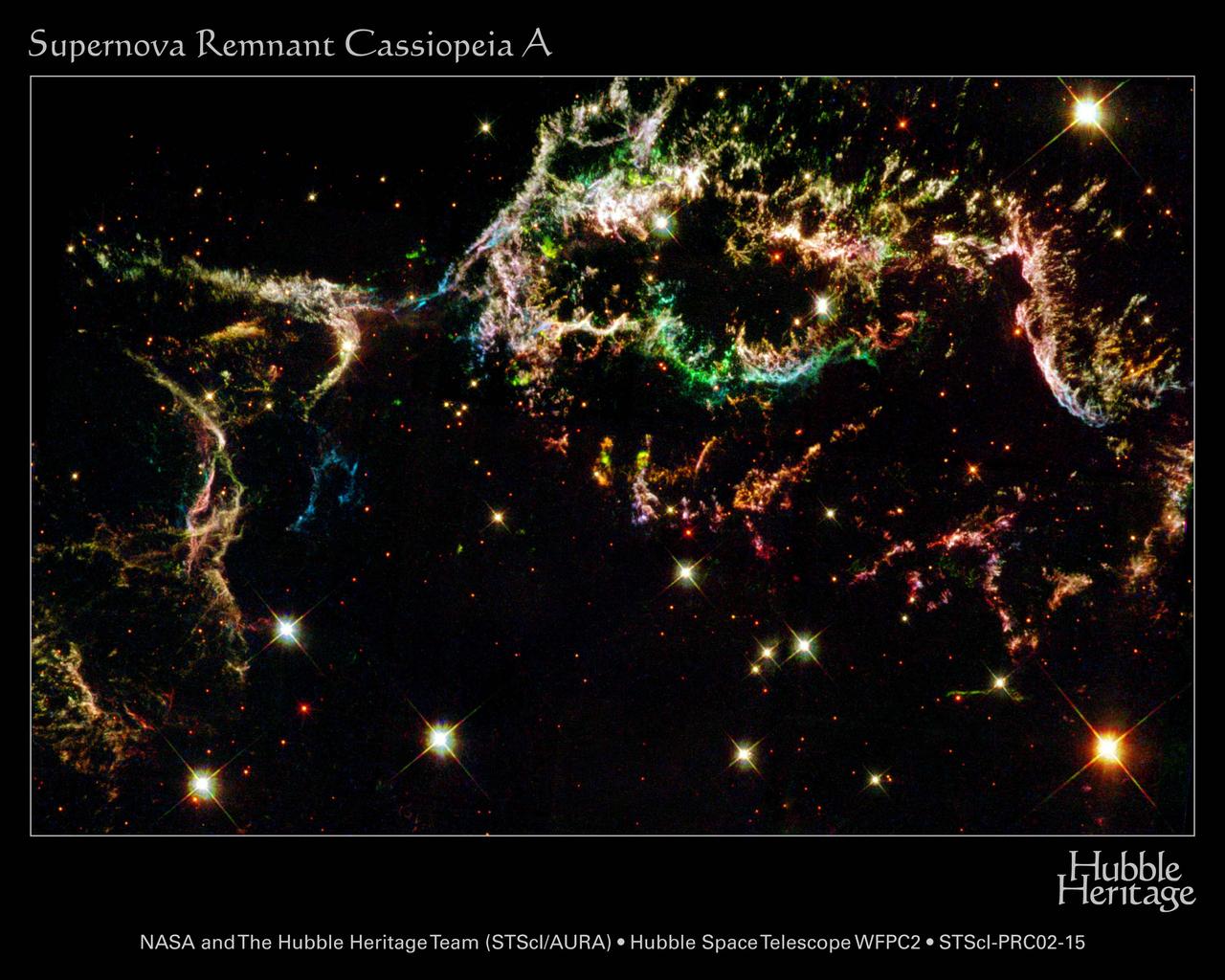
The colorful streamers that float across the sky in this photo taken by NASA's Hubble Space Telescope (HST) were created by the universe's biggest firecracker, the titanic supernova explosion of a massive star. The light from the exploding star reached Earth 320 years ago, nearly a century before the United States celebrated its birth with a bang.

SERENDIPITYA little unexpected
FamiliarWeird

The colorful streamers that float across the sky in this photo taken by NASA's Hubble Space Telescope (HST) were created by the universe's biggest firecracker, the titanic supernova explosion of a massive star. The light from the exploding star reached Earth 320 years ago, nearly a century before the United States celebrated its birth with a bang. The dead star's shredded remains are called Cassiopeia A, or "Cas A" for short. Cas A is the youngest known supernova remnant in our Milky Way Galaxy and resides 10,000 light-years away in the constellation Cassiopeia, so the star actually blew up 10,000 years before the light reached Earth in the late 1600s. This HST image of Cas A shows for the first time that the debris is arranged into thousands of small, cooling knots of gas. This material e

Explore NASA's original image record for credits and available downloads.

NASA Image and Video LibrarySpace Science

Original explanation based on the sources above. Images carry their own reuse terms.