YOUR NEXT DISCOVERY/SpaceFollow your curiosity
Microgravity
NASA / MSFC · Reuse terms

Space / 1966-11-24

Microgravity

Microgravity

NASA's image library records Microgravity.

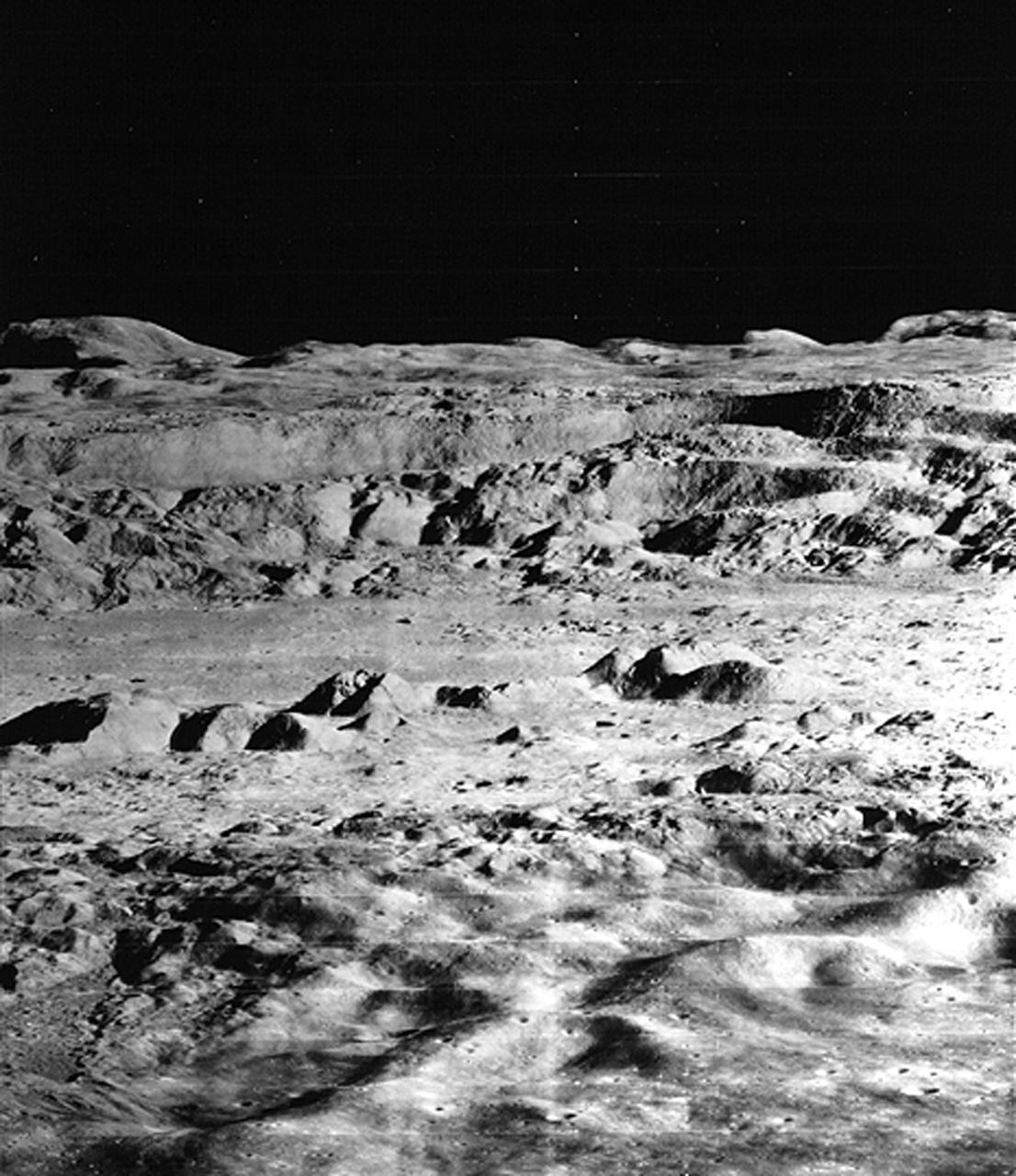
Lunar Orbiter 2 oblique northward view towards Copernicus crater on the Moon shows crater wall slumping caused by soil liquefaction following the impact that formed the crater. The crater is about 100 km in diameter. The central peaks are visible towards the top of the image, rising about 400 m above the crater floor, and stretching for about 15 km

SERENDIPITYA little unexpected
FamiliarWeird

Lunar Orbiter 2 oblique northward view towards Copernicus crater on the Moon shows crater wall slumping caused by soil liquefaction following the impact that formed the crater. The crater is about 100 km in diameter. The central peaks are visible towards the top of the image, rising about 400 m above the crater floor, and stretching for about 15 km. The northern wall of the crater is in the background. Sand and soil grains have faces that can cause friction as they roll and slide against each other, or even cause sticking and form small voids between grains. This complex behavior can cause soil to behave like a liquid under certain conditions such as earthquakes or when powders are handled in industrial processes. MGM experiments aboard the Space Shuttle use the microgravity of space to si

Explore NASA's original image record for credits and available downloads.

NASA Image and Video LibraryMicrogravity

Original explanation based on the sources above. Images carry their own reuse terms.