A CLOSER LOOK
Project Gutenberg’s text follows the 1922 Hutchinson and Co. edition and lists more than sixty poems. The sequence ranges from garden lyrics and love poems to hospital and wartime pieces. Reading the contents as a map shows why Many Voices is an unusually exact title: Nesbit repeatedly changes the situation from which a poem is allowed to speak.
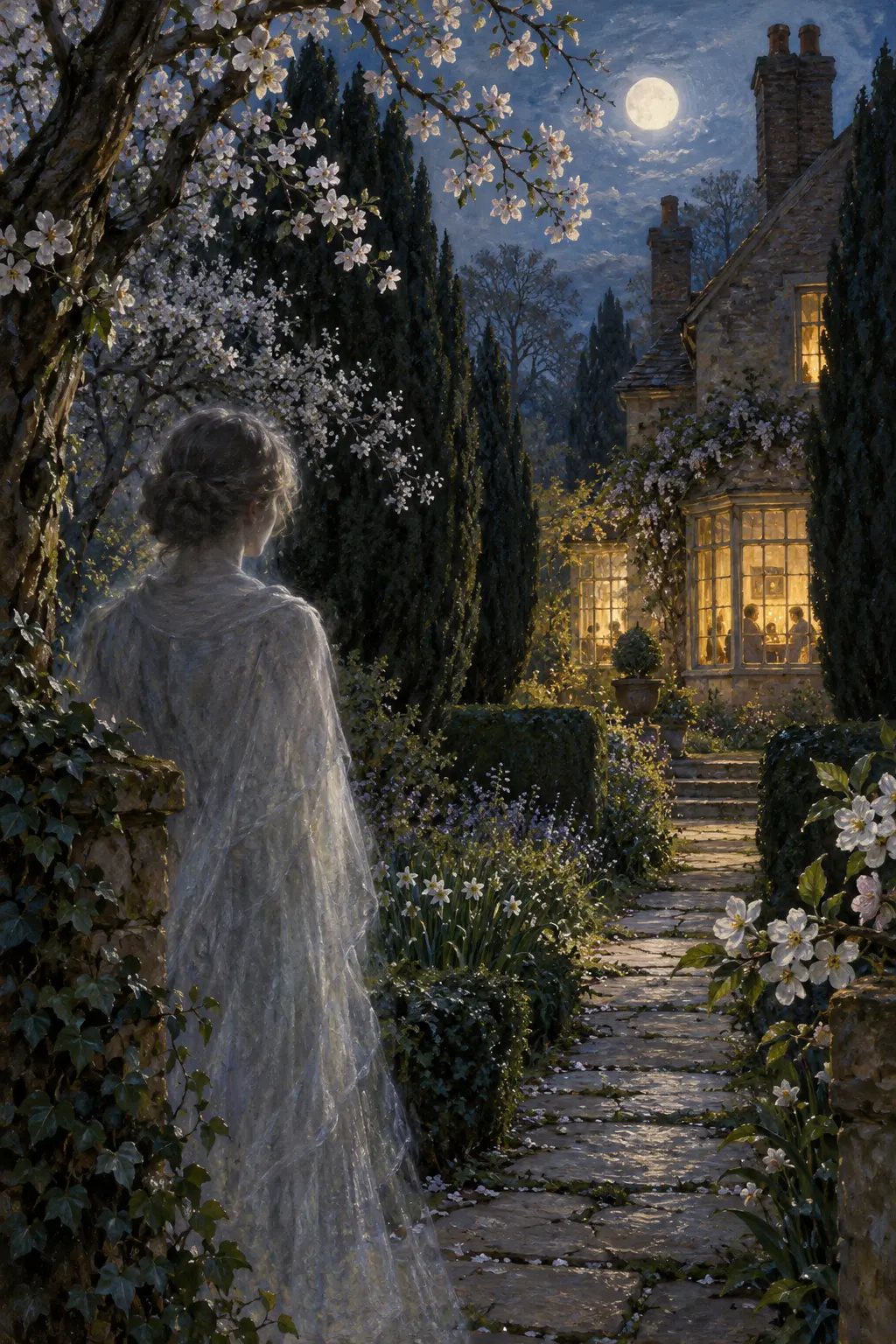
The Return begins with a speaker crossing a moonlit churchyard and walking home through a spring garden. Familiar furniture glows through the window, yet clues accumulate that the visitor is dead. The poem builds its discovery through ordinary surfaces—dew, blossoms, polished wood, brass, china—so domestic recognition becomes the source of separation.
The Stolen God shifts from personal memory to a collective voice identified in its subtitle as Lazarus addressing Dives. That speaker inventories dispossession: pasture, forest, cornland, mines, family life, and faith. The biblical names frame industrial inequality as a moral accusation, while the poem’s repeated “you have taken” gives the argument the force of testimony.
The collection also contains poems explicitly marked by the First World War, including Prayer in Time of War, The Fields of Flanders, and Spring in War-Time. Their presence beside love, ageing, gardens, and social protest resists a single summary of Nesbit’s late work. The generated illustration interprets the divided warmth and moonlight of The Return; it is not an original edition image.