YOUR NEXT DISCOVERY/ArtifactsFollow your curiosity
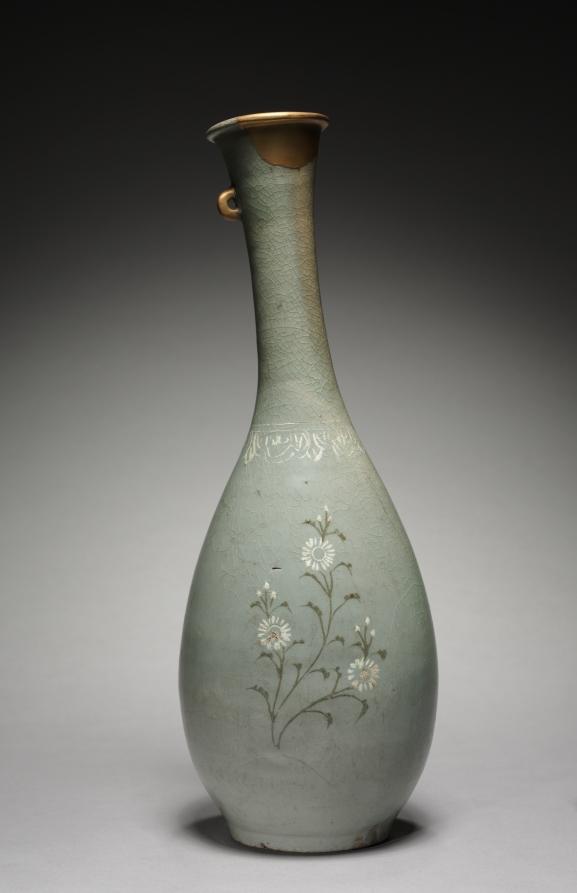
Bottle with Chrysanthemum Design, from The Cleveland Museum of Art
The Cleveland Museum of Art · Open Access · Reuse terms

Korea, Goryeo dynasty (918–1392) / 1200s-1300s

Bottle with Chrysanthemum Design

Bottle with Chrysanthemum Design

The Cleveland Museum of Art catalogs Bottle with Chrysanthemum Design as ceramic (Korea, Goryeo dynasty (918–1392) · 1200s-1300s).

Termed kintsugi (literally meaning “gold joinery”) in Japanese, this method of repairing broken parts with glittering gold mixed with lacquer was extensively used for ceramic works in the Goryeo period, such as this one.

SERENDIPITYA little unexpected
FamiliarWeird

The museum identifies this ceramic as Celadon ware with inlaid white and black slip decoration.

The museum's collection notes: This rare long-neck celadon wine bottle is inlaid with white wild chrysanthemums, symbols of both the poem "Drinking Wine" and blessings of longevity. One root has three stems with tiny white blossoms. The damaged lip was repaired with gold lacquer. Korean Celadons Repaired with Gold Termed kintsugi (literally meaning “gold joinery”) in Japanese, this method of repair highlights broken parts with glittering gold mixed with lacquer. Initiated in 15th-century Japan, the technique follows a popular aesthetic concept called wabi-sabi , which finds beauty in imperfect things and continued to be practiced throughout the modern period in East Asia.

The Cleveland Museum of ArtBottle with Chrysanthemum Design

Original explanation based on the sources above. Images carry their own reuse terms.