YOUR NEXT DISCOVERY/ArtifactsFollow your curiosity
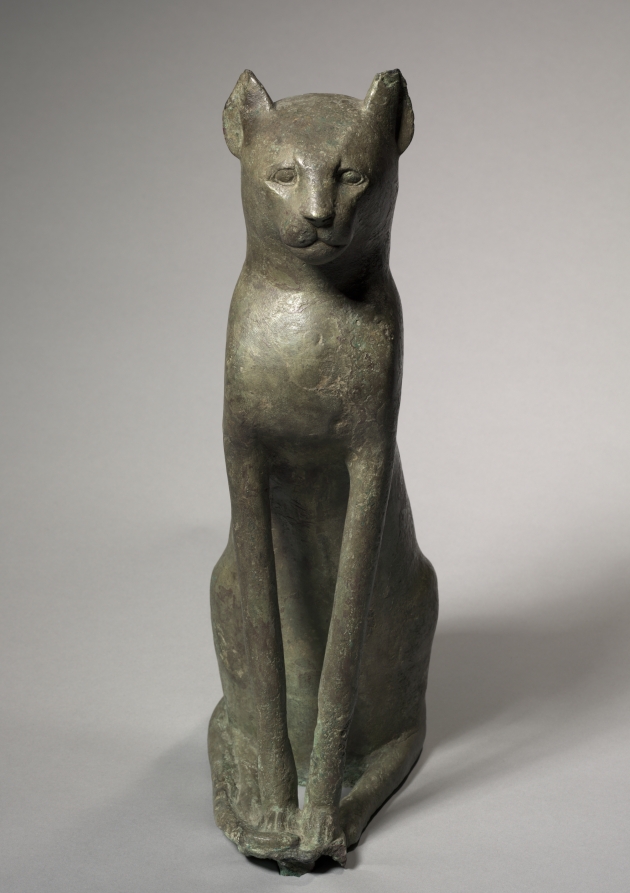
Cat Coffin, from The Cleveland Museum of Art
The Cleveland Museum of Art · Open Access · Reuse terms

Egypt, Greco-Roman period (332 BCE–395 CE), Ptolemaic dynasty (305–30 BCE) / 305–30 BCE

Cat Coffin

Cat Coffin

The Cleveland Museum of Art catalogs Cat Coffin as funerary equipment (Egypt, Greco-Roman period (332 BCE–395 CE), Ptolemaic dynasty (305–30 BCE) · 305–30 BCE).

A necklace appears to have been incised or scratched into the finished bronze; faint traces are visible on the chest.

SERENDIPITYA little unexpected
FamiliarWeird

The museum identifies this funerary equipment as bronze, hollow cast.

The museum's collection notes: Although the cat is considered the most Egyptian of animals, as an object of worship the cat does not appear until late in Egyptian history. This unusually large statue of a cat was made to hold the mummified remains of a sacred cat. The coffin is, of course, hollow, with an open bottom. As usual, the animal’s tail is curled around its right side.

The Cleveland Museum of ArtCat Coffin

Original explanation based on the sources above. Images carry their own reuse terms.