YOUR NEXT DISCOVERY/ArtifactsFollow your curiosity
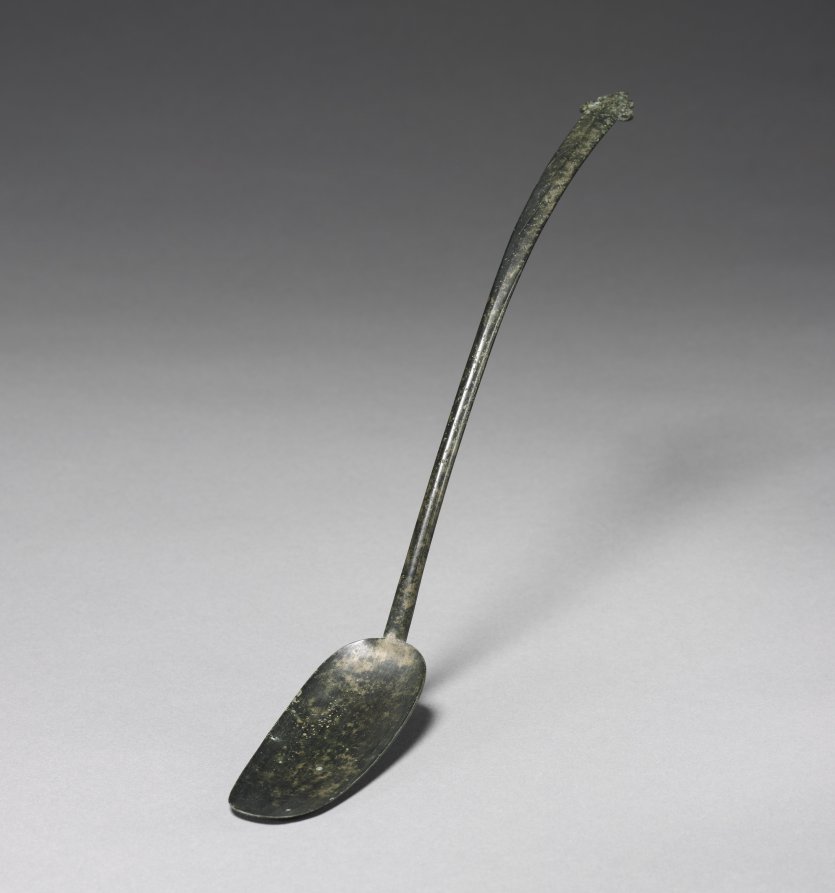
Spoon, from The Cleveland Museum of Art
The Cleveland Museum of Art · Open Access · Reuse terms

Korea, Goryeo dynasty (918–1392) / 918–1392

Spoon

Spoon

The Cleveland Museum of Art catalogs Spoon as metalwork (Korea, Goryeo dynasty (918–1392) · 918–1392).

Scholars have proposed that toward the end of the 1300s, Koreans enjoyed meat-based soups more than any other dishes, explaining why spoons became common household items as well as burial goods.

SERENDIPITYA little unexpected
FamiliarWeird

The museum identifies this metalwork as silver bronze.

The museum's collection notes: Celadons, spoons, seals, and bronze mirrors were among the most common burial objects of the Goryeo dynasty (918–1392), placed in tombs to honor and comfort the deceased. This spoon, with its gracefully curved bowl and handle that bends downward to each side, ending in a scepter-shaped finial, is distinctive in design and was likely used in Buddhist rituals, rather than as an everyday utensil.

The Cleveland Museum of ArtSpoon

Original explanation based on the sources above. Images carry their own reuse terms.