A CLOSER LOOK
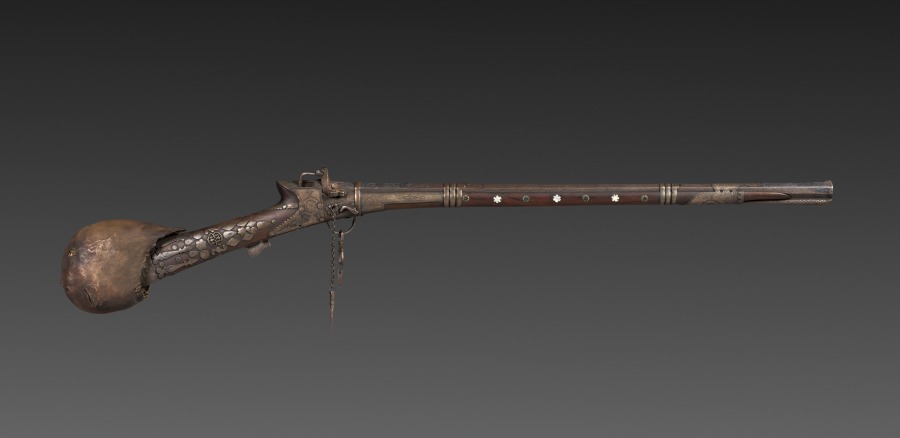
The museum identifies this arms and armor as Wood, steel, brass, mother-of-pearl inlay, and leather.
The museum's collection notes: Collectively, the Safavid, Mughal, and Ottoman empires are known as the Gunpowder Empires. Particularly from the 1500–1700s, they were among the strongest economic, cultural, and militaristic powers. Each trained and equipped their armies with the latest gunpowder firearms, particularly cannons and muskets. While used in battle, muskets were also used for leisure activities, particularly hunting. The decoration on this musket suggests it was a courtly item, fitted with a leather pad to protect the shooter from the force of the explosion after firing.