YOUR NEXT DISCOVERY/ArtifactsFollow your curiosity
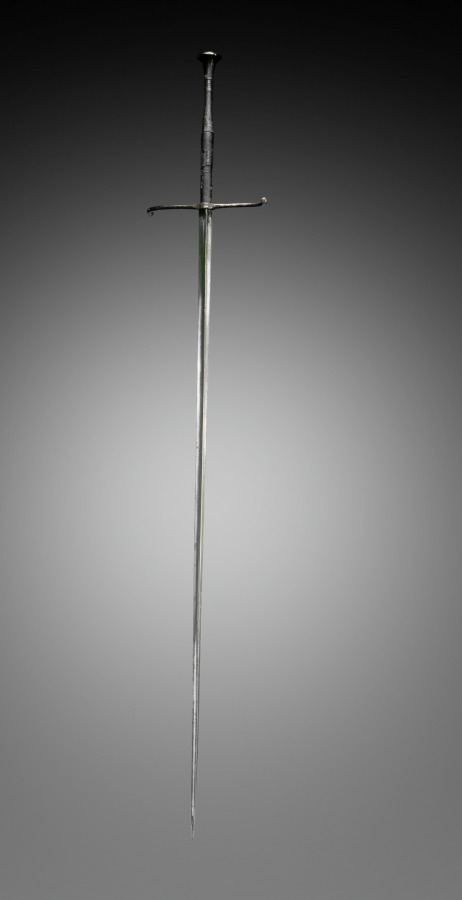
Estoc, from The Cleveland Museum of Art
The Cleveland Museum of Art · Open Access · Reuse terms

Germany, early 16th Century / early 1500s

Estoc

Estoc

The Cleveland Museum of Art catalogs Estoc as arms and armor (Germany, early 16th Century · early 1500s).

Swords like this one were developed to counteract and pierce the increasingly heavy armor and sophisticated plates that nearly covered a knight.

SERENDIPITYA little unexpected
FamiliarWeird

The museum identifies this arms and armor as steel, wood and leather.

The museum's collection notes: The French word estoc means "thrust" and therefore was adopted as the name for this long thrusting sword. It has a fairly long grip and simple cross-shaped hilt. The rigid blade, designed for thrusting at armored opponents, is three-sided for strength. The estoc was sometimes carried from the saddle. From the early 1300s, it was used by cavalrymen as an auxiliary side arm when a horseman had dismounted.

The Cleveland Museum of ArtEstoc

Original explanation based on the sources above. Images carry their own reuse terms.