YOUR NEXT DISCOVERY/ArtifactsFollow your curiosity
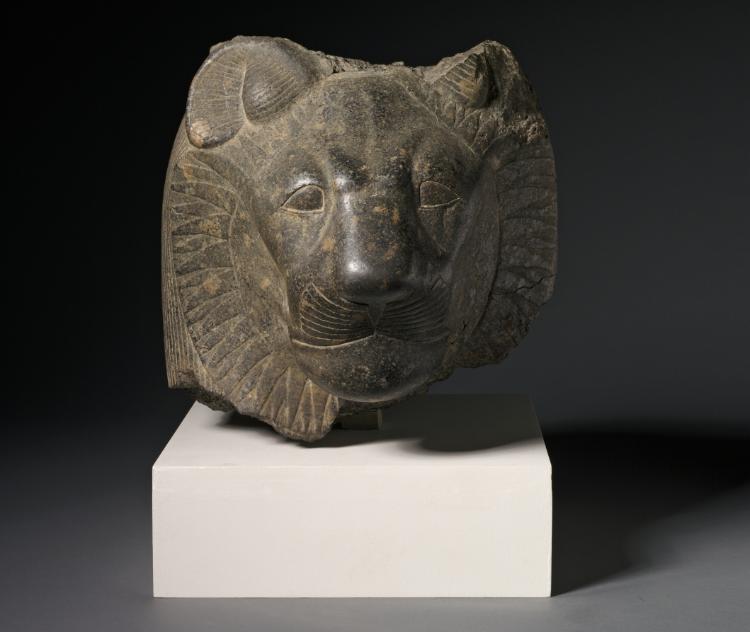
Head of Sekhmet, from The Cleveland Museum of Art
The Cleveland Museum of Art · Open Access · Reuse terms

Egypt, Thebes(?), New Kingdom (1540–1069 BCE), Dynasty 18, reign of Amenhotep III (1390–1352 BCE) / c. 1391–1353 BCE

Head of Sekhmet

Head of Sekhmet

The Cleveland Museum of Art catalogs Head of Sekhmet as sculpture (Egypt, Thebes(?), New Kingdom (1540–1069 BCE), Dynasty 18, reign of Amenhotep III (1390–1352 BCE) · c. 1391–1353 BCE).

Amenhotep III may have dedicated 730 statues of Sekhmet, two for each day of the year.

SERENDIPITYA little unexpected
FamiliarWeird

The museum identifies this sculpture as granodiorite.

The museum's collection notes: This lioness head once belonged to a grand statue of the goddess Sekhmet, "the powerful one," probably seated and wearing a tight dress. Possibly appealing to her healing aspect, Pharaoh Amenhotep III, often described as “beloved of Sekhmet,” commissioned and dedicated hundreds of large granodiorite Sekhmet sculptures in his Theban mortuary temple. Thus, this head likely comes from Thebes, perhaps later moved across the Nile—like many such sculptures—to the temple of Mut, a related deity, at Karnak. Behind her stylized ruff, Sekhmet wears a wig, once crowned with a sun disk and uraeus, the stylized cobra symbolizing royal or divine power.

The Cleveland Museum of ArtHead of Sekhmet

Original explanation based on the sources above. Images carry their own reuse terms.