YOUR NEXT DISCOVERY/ArtifactsFollow your curiosity
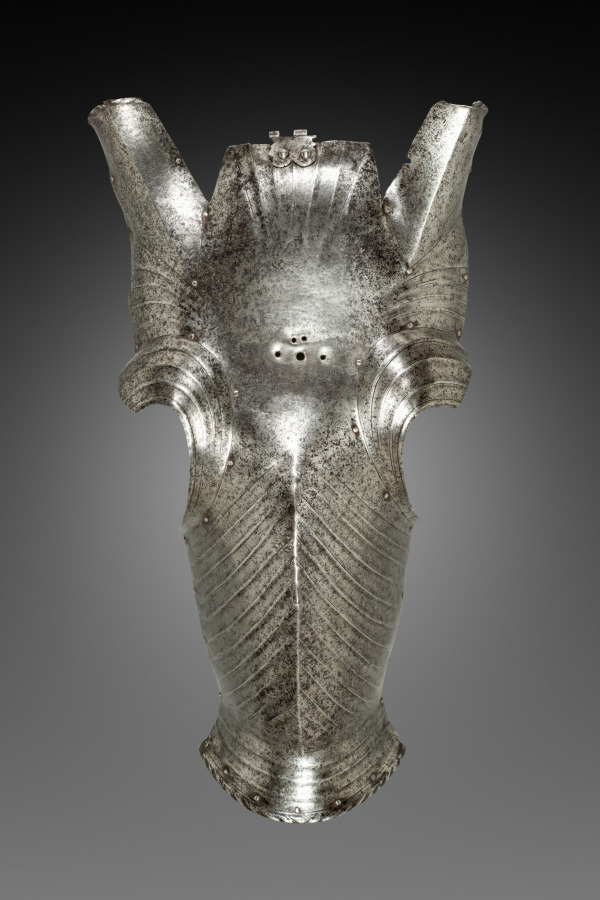
Chanfron in Maximilian Style, from The Cleveland Museum of Art
The Cleveland Museum of Art · Open Access · Reuse terms

Germany, Nuremberg (?), early 16th Century / c. 1510

Chanfron in Maximilian Style

Chanfron in Maximilian Style

The Cleveland Museum of Art catalogs Chanfron in Maximilian Style as arms and armor (Germany, Nuremberg (?), early 16th Century · c. 1510).

Nuremberg was a chief armor production center and gained international renown; products from here were exported throughout Europe.

SERENDIPITYA little unexpected
FamiliarWeird

The museum identifies this arms and armor as steel.

The museum's collection notes: The chanfron was the primary element that protected and decorated a horse's forehead and face. It consisted of a plate of steel contoured to the horse's head from its ears to its nostrils. Normally, two holes were cut at each side of the forehead for the ears, and earpieces were sometimes riveted around their edges. This example, however, was forged in one piece. It belongs to the transitional period between the Gothic and the fluted armors introduced by Emperor Maximilian. The hinge at the top is for the attachment of the crest plate.

The Cleveland Museum of ArtChanfron in Maximilian Style

Original explanation based on the sources above. Images carry their own reuse terms.