A CLOSER LOOK
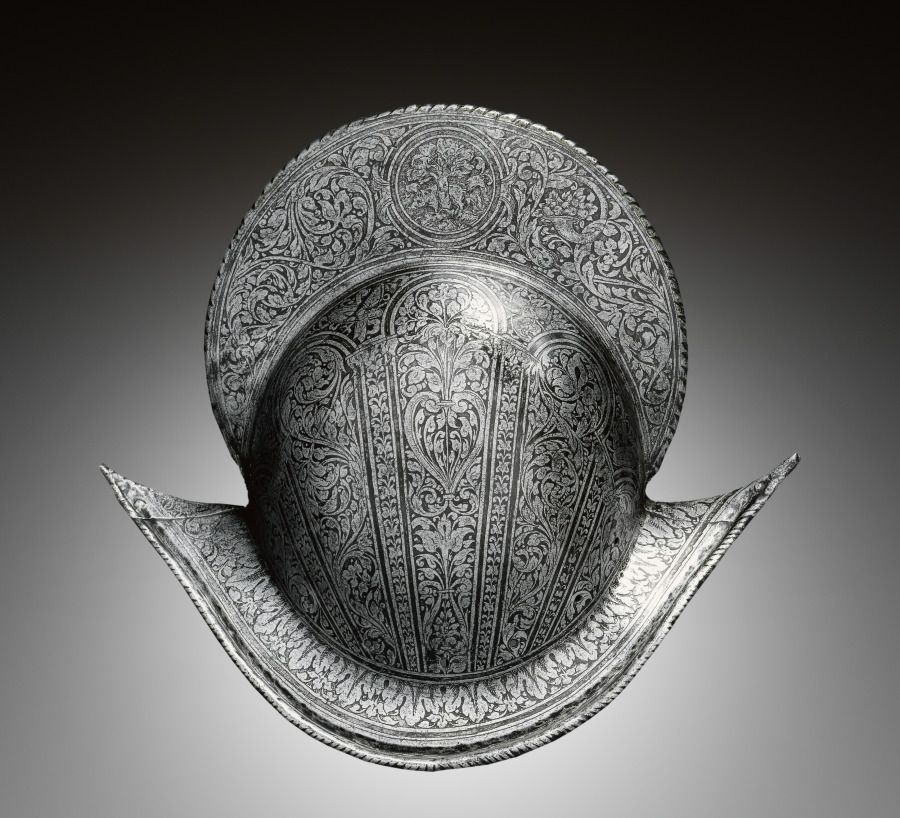
The museum identifies this arms and armor as steel with etched floral motif and medallion (on comb) with boar under oak tree.
The museum's collection notes: The morion, an open helmet characterized by a tall comb and curved brim peaking before and after, was popularly associated with the Spanish conquistadors in the New World. In fact, morions were worn by infantry and light horsemen throughout Europe. They were also commonly worn by palace guards and thus often were decorated. This example has been beautifully etched over its entire surface. Armor this exquisitely decorated would not have been worn in battle, but used by palace guards for ceremonies and display.