YOUR NEXT DISCOVERY/ArtifactsFollow your curiosity
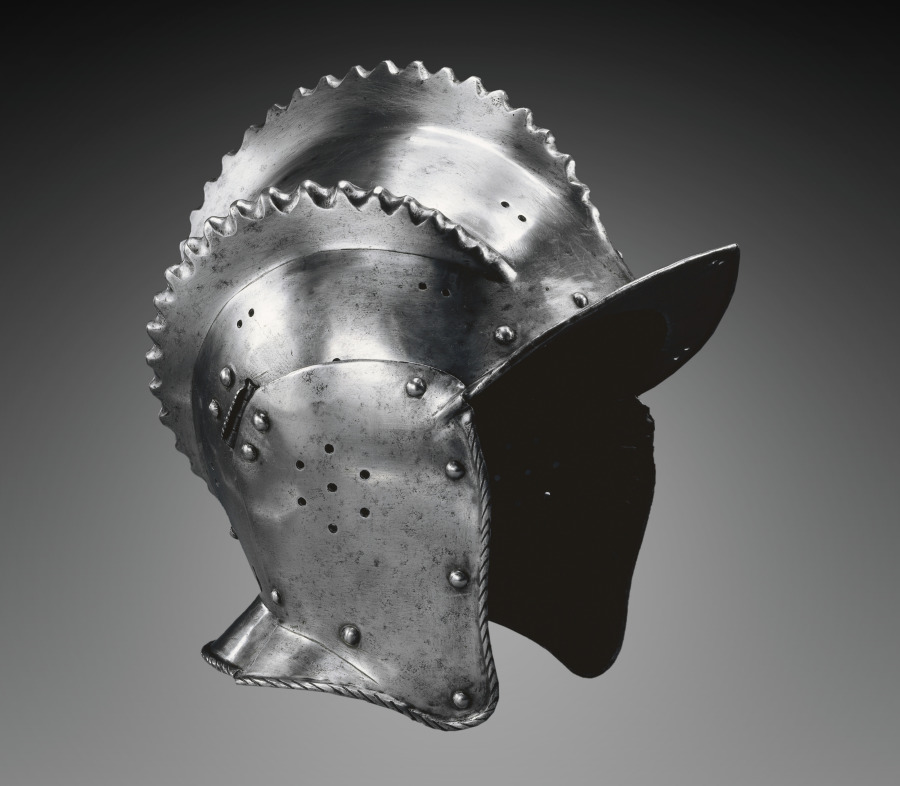
Triple-Crested Burgonet, from The Cleveland Museum of Art
The Cleveland Museum of Art · Open Access · Reuse terms

Germany, possibly Augsburg / c. 1560–70

Triple-Crested Burgonet

Triple-Crested Burgonet

The Cleveland Museum of Art catalogs Triple-Crested Burgonet as arms and armor (Germany, possibly Augsburg · c. 1560–70).

The open face of the burgonet meant it was a lighter and cheaper to manufacture than closed face helmets, it also allowed the wearer to see more freely, the trade off was less protection for the face.

SERENDIPITYA little unexpected
FamiliarWeird

The museum identifies this arms and armor as steel, leather bands.

The museum's collection notes: Popular throughout the 1500s and 1600s, the burgonet was a light, open headpiece favored by cavalry and infantry alike. Its main features are a peak over the eyes and hinged cheekpieces that fasten with a strap or lace under the chin. The basic helmet lent itself to variations of design or ornamentation. This version, with its triple crests, is known to have been produced in Augsburg. The style was worn by the bodyguard of Emperor Charles V (ruled 1519-56).

The Cleveland Museum of ArtTriple-Crested Burgonet

Original explanation based on the sources above. Images carry their own reuse terms.