YOUR NEXT DISCOVERY/ArtifactsFollow your curiosity
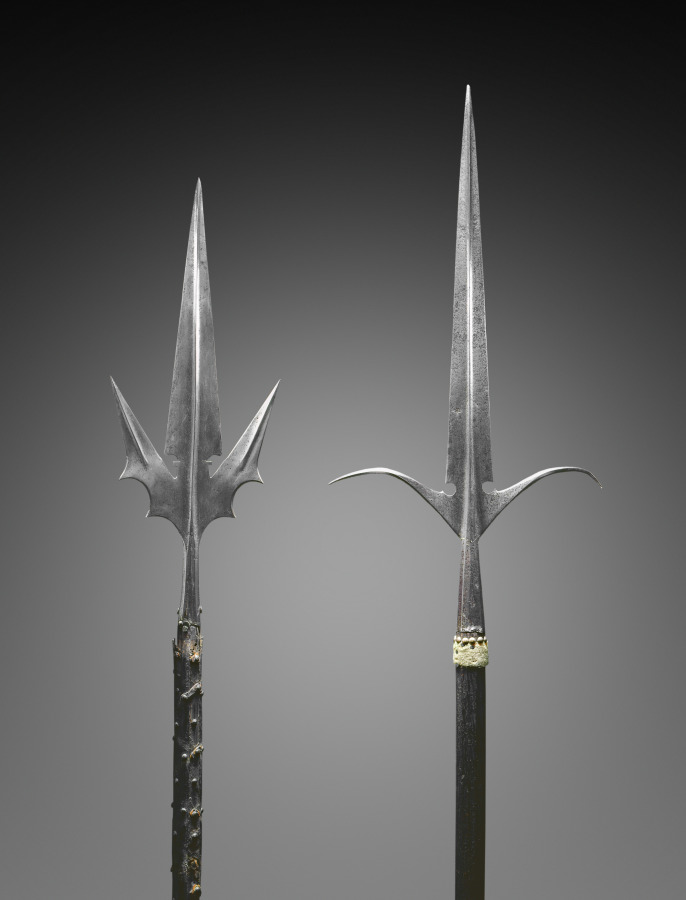
Corsèque (Chauve-Souris), from The Cleveland Museum of Art
The Cleveland Museum of Art · Open Access · Reuse terms

North Italy, 16th century / c. 1530

Corsèque (Chauve-Souris)

Corsèque (Chauve-Souris)

The Cleveland Museum of Art catalogs Corsèque (Chauve-Souris) as arms and armor (North Italy, 16th century · c. 1530).

The corsèque is said to have originated in Corsica, from where it takes its name.

SERENDIPITYA little unexpected
FamiliarWeird

The museum identifies this arms and armor as steel; round wood haft with leather straps.

The museum's collection notes: The corsèque is a pole arm with a symmetrical three-pronged head consisting of a central double-edged blade and two sharp, upturned wings. The side blades served several functions: as guard to protect the soldier's hand when a thrust was delivered with the central blade; as a hook for unseating a mounted opponent; and to trip the opponent's horse. The corsèque was used mostly in Italy and France from the 1400s to the early 1600s.

The Cleveland Museum of ArtCorsèque (Chauve-Souris)

Original explanation based on the sources above. Images carry their own reuse terms.