A CLOSER LOOK
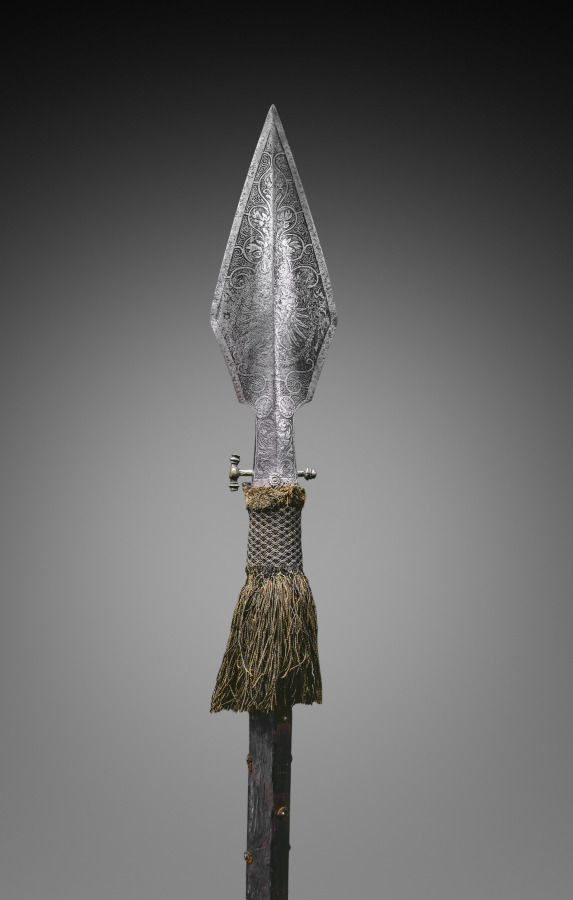
The museum identifies this arms and armor as steel, etched; brass lugs; hexagonal wood haft with leather straps; woolen tassel.
The museum's collection notes: This weapon is etched with the imperial Habsburg arms on one face and the Burgundian stave cross of St. Andrew on the other. In the 1500s, parade spears of this type became part of the insignia of infantry and light cavalry officers in the imperial army. In 1548 Titian painted an equestrian portrait of Emperor Charles V holding such a spear. At his abdication in 1556, Charles split the Habsburg inheritance between his son, Philip II of Spain, who was awarded control of Burgundy, and his brother, Frederick, who received the imperial title and the family's central European lands. This spear probably belongs to this later period and its purpose