YOUR NEXT DISCOVERY/ArtifactsFollow your curiosity
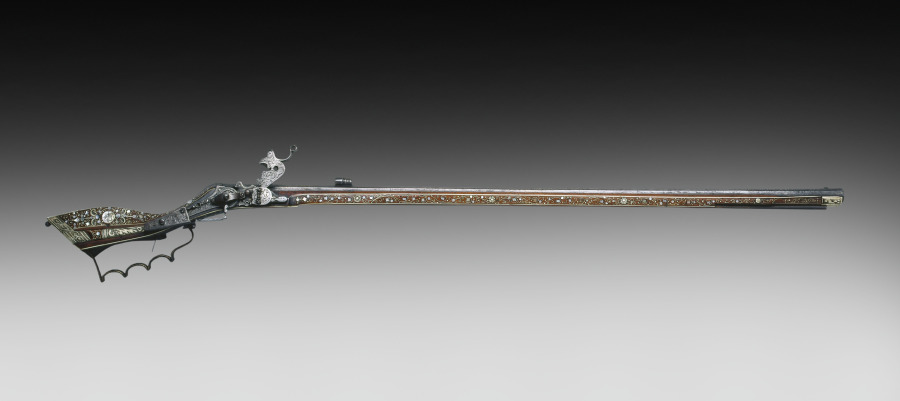
Tschinki (Wheel-Lock Hunting Rifle), from The Cleveland Museum of Art
The Cleveland Museum of Art · Open Access · Reuse terms

Poland, Silesia, 17th century / c. 1630–50

Tschinki (Wheel-Lock Hunting Rifle)

Tschinki (Wheel-Lock Hunting Rifle)

The Cleveland Museum of Art catalogs Tschinki (Wheel-Lock Hunting Rifle) as arms and armor (Poland, Silesia, 17th century · c. 1630–50).

At over four feet long, this rifle's scale is only outdone by the fine details of the gilding and inlaid precious materials. This weapon is known for the region in which it was made and popularized.

SERENDIPITYA little unexpected
FamiliarWeird

The museum identifies this arms and armor as steel with traces gilding; walnut stock inlaid with bone, stag horn, mother-of-pearl.

The museum's collection notes: This type of hunting gun owes its name to the town of Teschen in Silesia (now southern Poland) which, as early as 1580, was already associated with a particular type of gun. The precise date of the invention of the Tschinke is unknown, though a dated example of 1610 survives in the Imperial Armouries in Vienna.

The Cleveland Museum of ArtTschinki (Wheel-Lock Hunting Rifle)

Original explanation based on the sources above. Images carry their own reuse terms.