YOUR NEXT DISCOVERY/ArtifactsFollow your curiosity
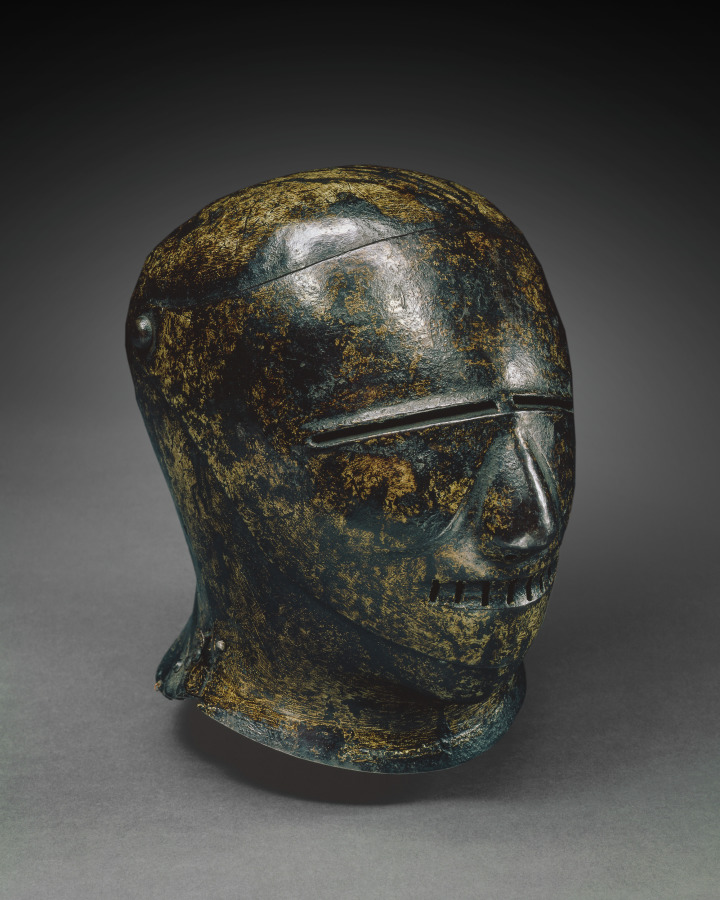
Closed Sallet with Grotesque Face (Schembart visor), from The Cleveland Museum of Art
The Cleveland Museum of Art · Open Access · Reuse terms

Germany, Nuremberg / c. 1500

Closed Sallet with Grotesque Face (Schembart visor)

Closed Sallet with Grotesque Face (Schembart visor)

The Cleveland Museum of Art catalogs Closed Sallet with Grotesque Face (Schembart visor) as arms and armor (Germany, Nuremberg · c. 1500).

Masked revelers at the Schembartlaufen of Nuremberg enjoyed food, drink, music, and dancing until coming to an abrupt end in 1539 due to the objections of a preacher.

SERENDIPITYA little unexpected
FamiliarWeird

The museum identifies this arms and armor as painted steel.

The museum's collection notes: A small number of similar painted helmets survive today. All appear to date to the early 1500s. The visors of these helmets are usually in the form of fiercely grimacing human or animal faces, known as Schembart visors after the masked revelers in the Schembartlaufen, the medieval Shrovetide parades. The city of Nuremberg was particularly famous for its Shrovetide parades that were often held in conjunction with a tournament in which the younger members of the city's patrician families, presumably sporting such helmets, participated.

The Cleveland Museum of ArtClosed Sallet with Grotesque Face (Schembart visor)

Original explanation based on the sources above. Images carry their own reuse terms.