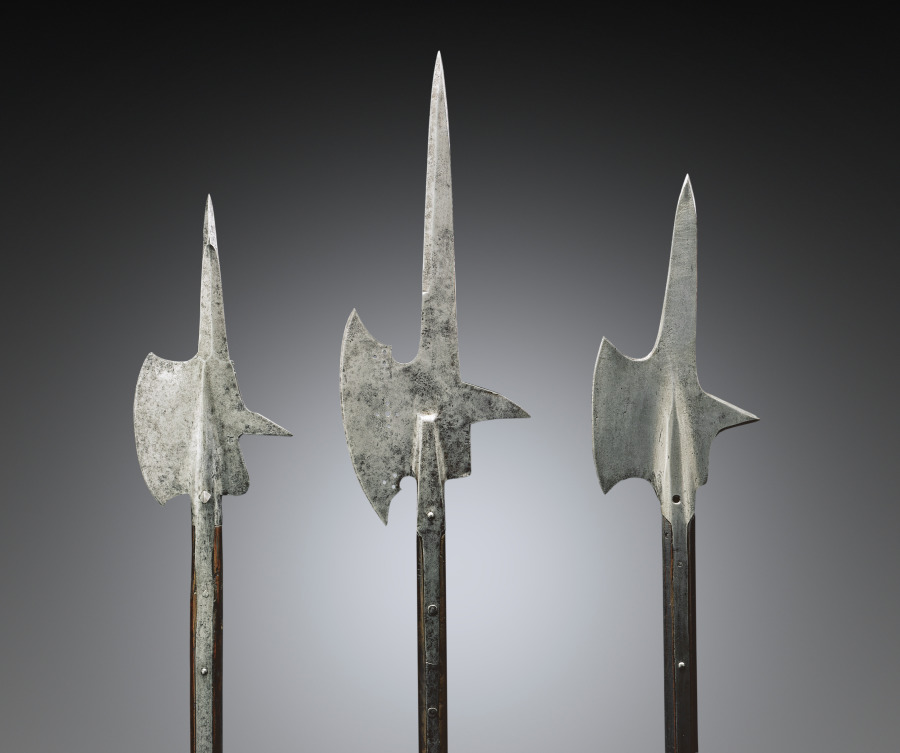
Germany (?) / 1475–1500
Halberd
Halberd
The Cleveland Museum of Art catalogs Halberd as arms and armor (Germany (?) · 1475–1500).
WHY IT’S INTERESTING
The first halberds are believed to have been made for warriors of medieval Switzerland.
Germany (?) / 1475–1500
Halberd
The Cleveland Museum of Art catalogs Halberd as arms and armor (Germany (?) · 1475–1500).
The first halberds are believed to have been made for warriors of medieval Switzerland.
A CLOSER LOOK
The museum identifies this arms and armor as steel, pierced circular holes; wood haft.
The museum's collection notes: The halberd was a staff weapon favored by European infantries (foot soldiers) of the 1400s and 1500s for its versatility and deadly effect. The word halberd comes from the German words Halm (staff) and Barte (axe). The halberd is, in fact, an axe that served multiple functions: the axe blade was used for hacking, the spike for thrusting, and the beak for piercing plate armor or for pulling a knight from his saddle. The halberd was used by shock troops (those who lead an attack) and by Swiss and German mercenaries. After about 1550, the halberd gradually became less functional. Its large blade provided space for coats of arms and insignia. By
FOLLOW THE EVIDENCE
The Cleveland Museum of ArtHalberdOriginal explanation based on the sources above. Images carry their own reuse terms.