A CLOSER LOOK
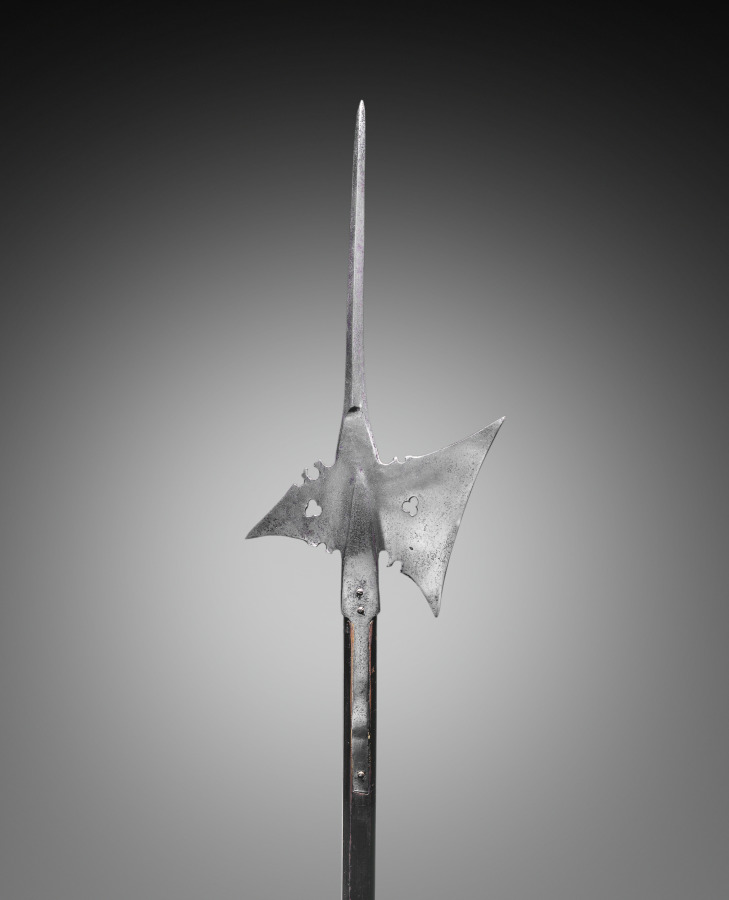
The museum identifies this arms and armor as steel, with pierced trefoils; wood haft (rectangular with planed corners).
The museum's collection notes: The most effecient weapons used by the infantry (foot soldiers) during the 15th and 16th centuries were pole arms (or staff weapons). The halberd, like the examples shown here, was a weapon of great versatility. The word halberd comes from the German words Halm (a staff) and Barte (an axe). The halberd is, in fact, an axe mounted on a long pole with a very specialized shape and function: the axe blade was used for hacking, the spike for thrusting, and the beak either for piercing plate armor or for pulling a knight from his saddle. Used by shock troops, the halberd was the weapon of choice for Swiss and German mercenaries. From about 1550 onw