YOUR NEXT DISCOVERY/ArtifactsFollow your curiosity
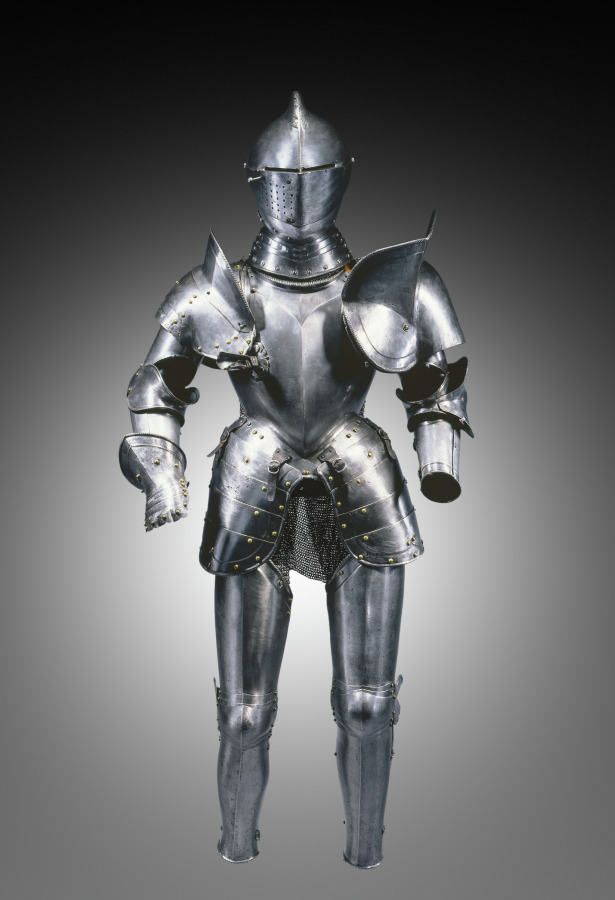
Tilting Suit (composed), from The Cleveland Museum of Art
The Cleveland Museum of Art · Open Access · Reuse terms

South Germany, 16th century / c. 1560–80

Tilting Suit (composed)

Tilting Suit (composed)

The Cleveland Museum of Art catalogs Tilting Suit (composed) as arms and armor (South Germany, 16th century · c. 1560–80).

Currently only the helmet of this suit is displayed in the museum's armor court; although both helmet and suit came into the collection together they do not belong together.

SERENDIPITYA little unexpected
FamiliarWeird

The museum identifies this arms and armor as steel, leather straps, brass rivets.

The museum's collection notes: This armor was developed for the joust-a sporting combat between two mounted contestants. Although all of the elements of this armor date from the same period, they are not all from the same suit. This armor is thus called "composed." It also shows the asymmetry of jousting armor. The participants rode along a wall-like barrier known as a "tilt" with their left sides facing one another. Consequently, armor on that side of the body had to be thicker. Note the large plate (grandguard) over the left shoulder for extra protection. Also, the breathing holes in the helmet were placed on the right side (farthest from an opponent's lance) to avoid in

The Cleveland Museum of ArtTilting Suit (composed)

Original explanation based on the sources above. Images carry their own reuse terms.