A CLOSER LOOK
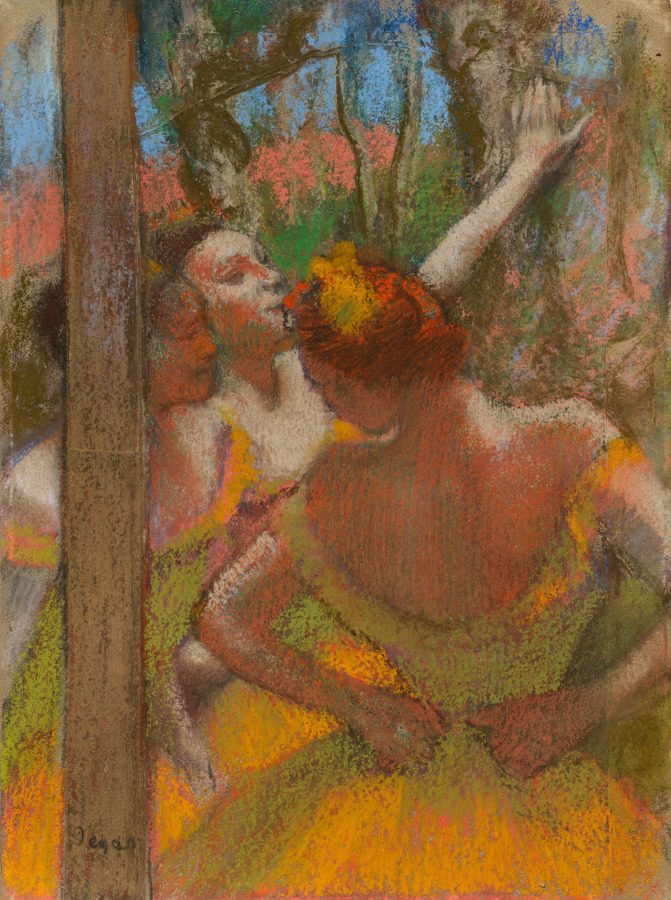
The museum identifies this drawing as pastel with charcoal on tracing paper mounted on paper and backed with gray board and credits Edgar Degas (French, 1834–1917).
The museum's collection notes: Degas depicted the ballet in more than 1,000 paintings, prints, pastels, and sculptures. He preferred private, offstage moments to glamorous curtain calls or artfully constructed compositions. Here, three dancers stretch together in the wings, unaware of the viewer’s presence. Powdery layers of yellow, orange, and pink pastel create a rough surface characteristic of Degas’s late work in the medium. He invented special techniques that allowed him to build layer upon layer of color with varying degrees of opacity and transparency. This pastel’s rich surface and intense, vibrating palette is the result of such innovative methods.