YOUR NEXT DISCOVERY/ArtifactsFollow your curiosity
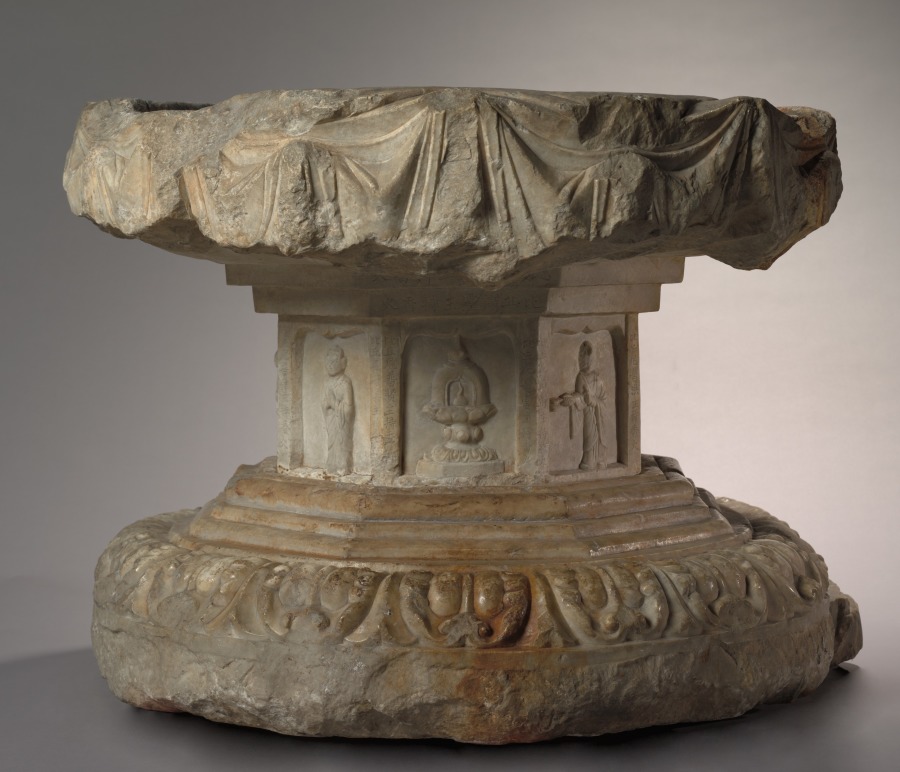
Fang Xuanling Pedestal, from The Cleveland Museum of Art
The Cleveland Museum of Art · Open Access · Reuse terms

China, Tang dynasty (618–907) / 647

Fang Xuanling Pedestal

Fang Xuanling Pedestal

The Cleveland Museum of Art catalogs Fang Xuanling Pedestal as sculpture (China, Tang dynasty (618–907) · 647).

In front, the top layer of the pedestal has an abstract curvilinear motif suggesting drapery; the rear is carved with a flower-and-leaf motif.

SERENDIPITYA little unexpected
FamiliarWeird

The museum identifies this sculpture as marble.

The museum's collection notes: This double lotus pedestal exhibits the rich, ornate style of early Tang sculpture. It was commissioned by the Duke of Liang, Fang Xuanling (578–648), for the blessing of his second son and daughter-in-law, the Tang imperial princess of Gaoyang. The iconography and inscription suggest that it originally went with a statue, now missing, of Shakyamuni, the historical Buddha, instead of Amitayus. Today the pedestal is topped with Amitayus, the Buddha of Infinite Life, seated in meditation. Although the pedestal was not made with the statue, the combination is faithful to the original artistic conception.

The Cleveland Museum of ArtFang Xuanling Pedestal

Original explanation based on the sources above. Images carry their own reuse terms.