YOUR NEXT DISCOVERY/ArtifactsFollow your curiosity
Stele of the High Priest of Ptah, Shedsunefertem, from The Cleveland Museum of Art
The Cleveland Museum of Art · Open Access · Reuse terms

Egypt, Third Intermediate (1069–715 BCE), Dynasty 22, reign of Shosheng I (943–922 BCE) / 945–924 BCE

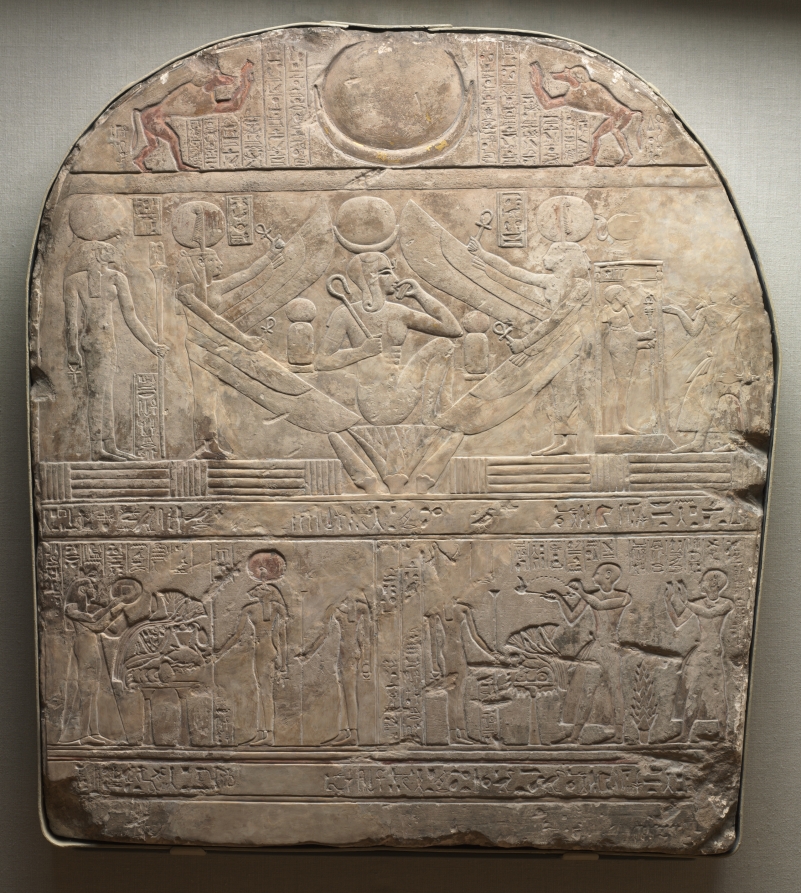
Stele of the High Priest of Ptah, Shedsunefertem

Stele of the High Priest of Ptah, Shedsunefertem

The Cleveland Museum of Art catalogs Stele of the High Priest of Ptah, Shedsunefertem as sculpture (Egypt, Third Intermediate (1069–715 BCE), Dynasty 22, reign of Shosheng I (943–922 BCE) · 945–924 BCE).

The eye and eyebrow of the young sun-god Ra (at center) were once inlaid.

SERENDIPITYA little unexpected
FamiliarWeird

The museum identifies this sculpture as limestone, originally painted and gilded.

The museum's collection notes: This stele of Shedsunefertem, the High Priest of Ptah, is rich in religious symbolism. In the center of the top register is a disk and crescent, originally gilded. At either side a baboon raises its arms in adoration. The Egyptians believed that the jabbering of the baboons at dawn was a hymn of praise to the sun god Ra in a secret language only the king understood. It begins, "Praising Ra when he shines on the horizon." Directly below in the middle register a child god is seated on a lotus flower. In Egyptian mythology the sun arose out of the primeval waters at the dawn of creation in a lotus flower. Winged figures of Maat, goddess of Truth

The Cleveland Museum of ArtStele of the High Priest of Ptah, Shedsunefertem

Original explanation based on the sources above. Images carry their own reuse terms.