YOUR NEXT DISCOVERY/ArtifactsFollow your curiosity
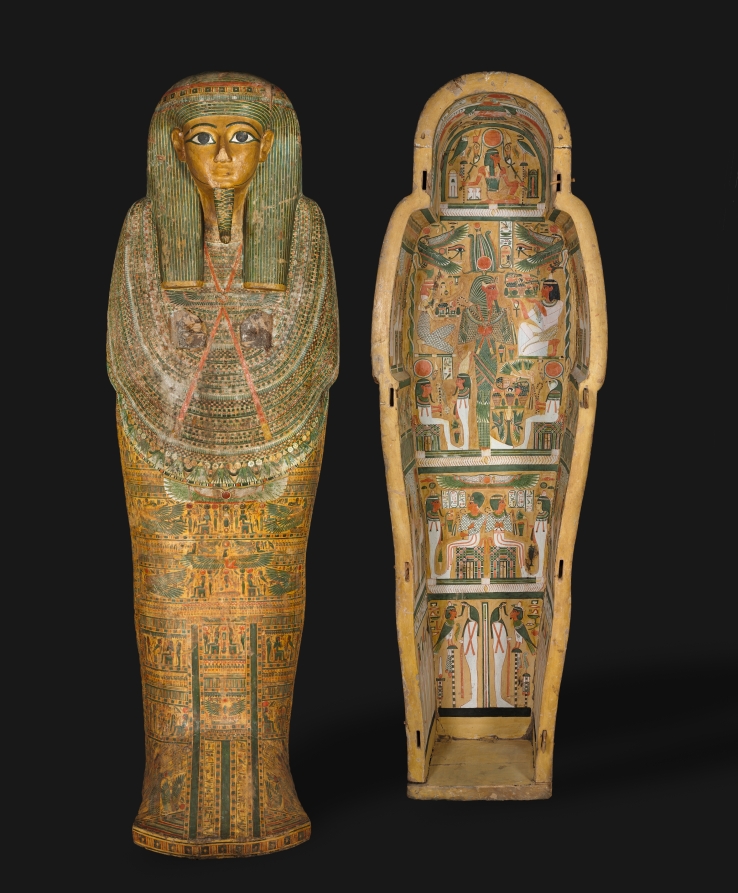
Coffin of Bakenmut, from The Cleveland Museum of Art
The Cleveland Museum of Art · Open Access · Reuse terms

Egypt, Thebes, Third Intermediate (1069–715 BCE), Dynasties 21–22 / c. 1000–900 BCE

Coffin of Bakenmut

Coffin of Bakenmut

The Cleveland Museum of Art catalogs Coffin of Bakenmut as funerary equipment (Egypt, Thebes, Third Intermediate (1069–715 BCE), Dynasties 21–22 · c. 1000–900 BCE).

Originally another smaller coffin was placed inside this outer coffin and in that the deceased with a mummy board would have rested.

SERENDIPITYA little unexpected
FamiliarWeird

The museum identifies this funerary equipment as gessoed and painted sycamore fig.

The museum's collection notes: The coffin of Bakenmut is one of the finest examples of painted wooden coffins made for the priests of Amen and their families at Thebes during Dynasty 21 and early Dynasty 22. The pharaohs of this time were no longer buried in the Valley of the Kings, but instead built tombs in the Delta, far to the north, where they resided. Security was lax in the Theban necropolis. The coffins and funerary goods of the wealthy citizens of Thebes were placed in unmarked and undecorated family tombs cut into the cliffs on the west bank of the Nile. All the care and detail that in more prosperous times were devoted to the decoration of the tomb chapel were n

The Cleveland Museum of ArtCoffin of Bakenmut

Original explanation based on the sources above. Images carry their own reuse terms.