Italy / c. 1572
Fata Morgana
Fata Morgana
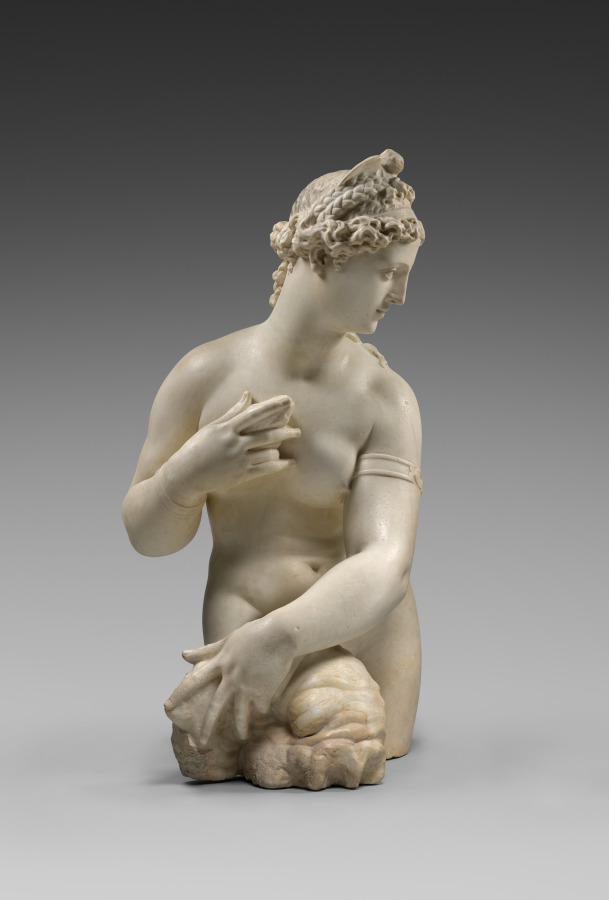
The Cleveland Museum of Art catalogs Fata Morgana as sculpture (Italy · c. 1572).
WHY IT’S INTERESTING
The sculpture originally appeared to emerge mysteriously from a cave within a constructed grotto.
Italy / c. 1572
Fata Morgana
The Cleveland Museum of Art catalogs Fata Morgana as sculpture (Italy · c. 1572).
The sculpture originally appeared to emerge mysteriously from a cave within a constructed grotto.
A CLOSER LOOK
The museum identifies this sculpture as Marble and credits Giambologna (Flemish, active Italy, 1529–1608).
The museum's collection notes: Commissioned by prominent banker Bernardo Vecchietti, whose surname means “old,” Fata Morgana took the name both of the nearby spring that fed the fountain she surmounted, and the legendary fairy who restored King Arthur’s youth. The Fata Morgana is one of only around a dozen sculptures in marble by Giambologna. The artist’s favorite subject was the female nude because of its capacity to showcase his extraordinary ability to model softness in hard stone and to convey dynamic movement. Her twisting pose invites the viewer to appreciate the Fata Morgana from every angle.
FOLLOW THE EVIDENCE
The Cleveland Museum of ArtFata MorganaOriginal explanation based on the sources above. Images carry their own reuse terms.