A CLOSER LOOK
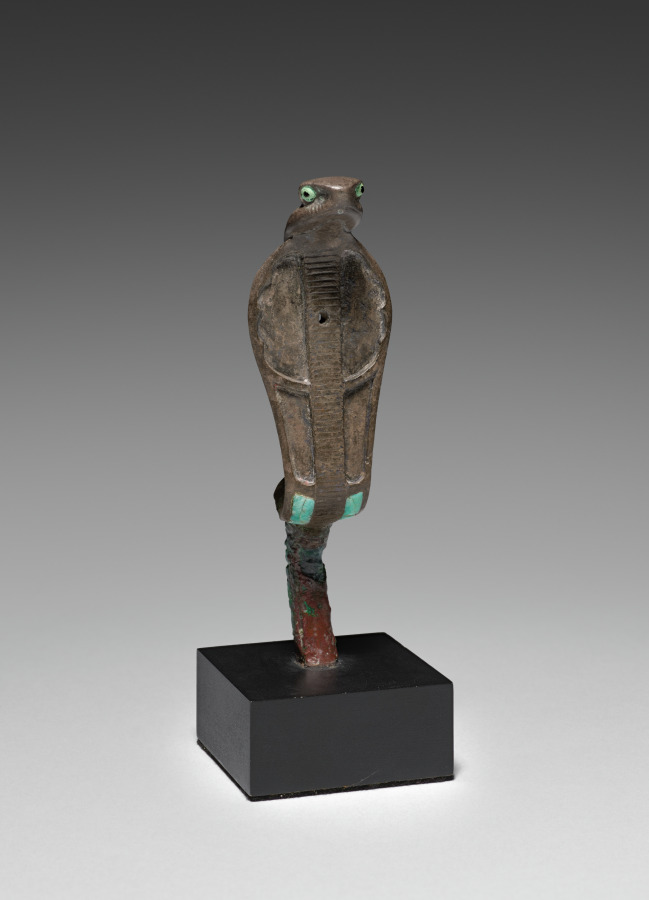
The museum identifies this metalwork as Silver-copper alloy with inlays (copper, feldspar, turquoise, obsidian?) and gilding.
The museum's collection notes: Made from a silver-copper alloy, this rearing cobra likely served as a uraeus, symbolizing royal or divine power in ancient Egypt. Its lowermost portion likely fit into the top of the head of a large sculpture, while its body and tail seem cut short, perhaps making room for a solar disk to rise up behind. The eyes are inlaid, and six cavities for additional inlay remain on the expanded hood, the lowermost still intact, the others likely once filled with brightly colored blue and red stone. Much of the remaining surface may once have been gilded, to judge from remaining traces of gold on the back.