YOUR NEXT DISCOVERY/ArtifactsFollow your curiosity
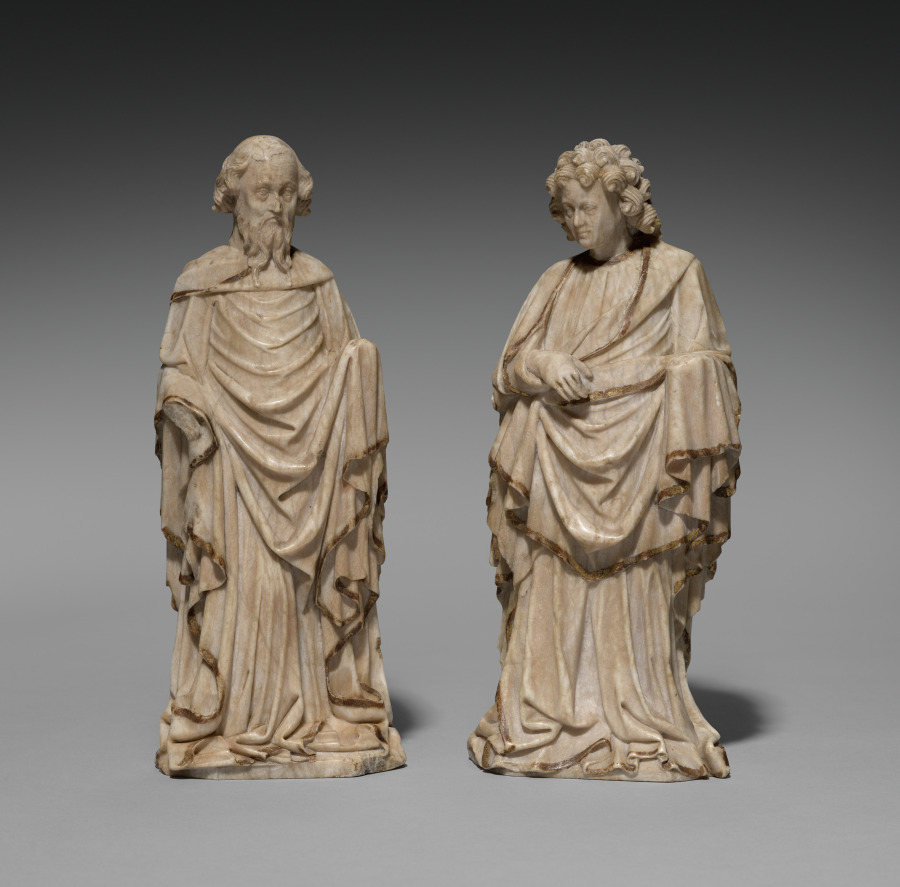
Two Standing Apostles (probably Saint John the Evangelist and St. Paul), from The Cleveland Museum of Art
The Cleveland Museum of Art · Open Access · Reuse terms

Southern Netherlands or Northern France / c. 1430

Two Standing Apostles (probably Saint John the Evangelist and St. Paul)

Two Standing Apostles (probably Saint John the Evangelist and St. Paul)

The Cleveland Museum of Art catalogs Two Standing Apostles (probably Saint John the Evangelist and St. Paul) as sculpture (Southern Netherlands or Northern France · c. 1430).

Alabaster is very soft; after 20 minutes of treatment with water the surface will dissolve.

SERENDIPITYA little unexpected
FamiliarWeird

The museum identifies this sculpture as Alabaster and credits Master of the Saint-Omer Apostles (Southern Netherlandish, active Bruges?).

The museum's collection notes: The two sculptures come from an altarpiece in the cathedral of Saint Omer in northern France. Four other figures have been preserved there, and possibly one at the Metropolitan Museum in New York. The workshop was probably located in Bruges, in what is now Belgium. Sculpture was the leading art genre at that time. The specialized workshops obtained the stone alabaster from distant quarries, in this case from the area of Würzburg in Bavaria (Germany), to form it intricately and deliver it to customers in almost all of Europe.

The Cleveland Museum of ArtTwo Standing Apostles (probably Saint John the Evangelist and St. Paul)

Original explanation based on the sources above. Images carry their own reuse terms.