A CLOSER LOOK
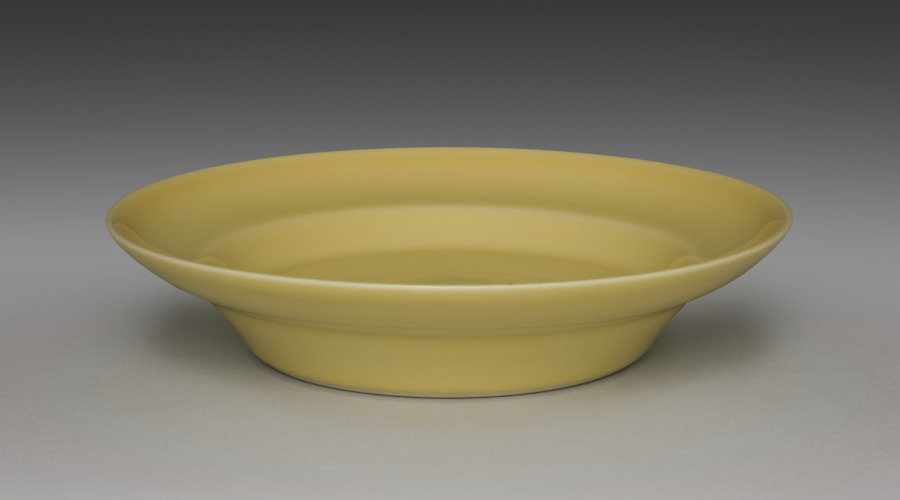
The museum identifies this ceramic as Glazed porcelain and credits Seifū Yohei III (Japanese, 1851–1914).
The museum's collection notes: Seifū Yohei III was the most prominent head of a ceramics studio in Kyoto that specialized in Chinese-style porcelains and especially items for use in sencha (煎茶), or the drinking of steeped-leaf tea with companions. Sencha was popular among the bunjin of Kyoto and Osaka, who often enjoyed it as part of their emulation of Chinese culture. While sencha was by design less formal than the Japanese tea ceremony, it still featured the display of treasured objects. Prized Chinese antiquities were generally unobtainable, so substitutes such as the Gu-Shaped Flower Vase, CMA 2022.224 , were much in demand. Bowls for distributing sweets, like this one